

Key Takeaways
- Wick type significantly impacts a candle’s burn quality, fragrance release, and longevity.
- Flat and square wicks self-trim for steady flames, while cored wicks maintain structure in container or pillar candles.
- Wooden and hemp wicks offer visual or eco-friendly benefits, and proper trimming ensures optimal performance.
- Flame size, burn time, soot production, and wax pool formation are all influenced by wick material and design.
- Understanding wick differences helps select the right candle for ambiance, fragrance efficiency, and safer, cleaner burning.
Most people focus on scent and design when choosing a candle, but the wick type is just as important. Wick selection directly affects how a candle burns, how long it lasts, and the overall fragrance experience. Taking the time to understand different wick styles can lead to a safer, more enjoyable burn and a better experience overall. For those interested in healthier home fragrance options, exploring non toxic candles can help you maximize both ambiance and safety.
The market offers a variety of wick materials and modern innovations, each affecting candle performance in unique ways. Selecting the right wick not only improves longevity and fragrance quality but also helps prevent issues such as tunneling or excess soot. The wick’s material, size, and structure all play crucial roles in how a candle burns and maintains its integrity.
Understanding these key differences makes it easier to choose the best candle for your needs. Whether you’re looking to set a cozy mood or maximize fragrance in a large space, the wick type can be the deciding factor in achieving the desired results. Learning which wick pairs best with your favorite candles can make each burn more enjoyable and efficient.
Curious about what makes certain candles perform better than others? A little wick knowledge goes a long way toward creating the perfect atmosphere at home and improving air quality while you enjoy your favorite fragrances.
Flat Wicks
Flat wicks are among the most commonly used candle wicks and are made by plaiting or knitting three bundles of fiber. Their flat structure means they curl naturally into the flame, which creates a “self-trimming” effect that minimizes mushrooming and keeps the flame steady. Tapers and pillar candles often use flat wicks for their smooth, reliable burn and efficient wax consumption. This type of wick provides a balance of flame size and wax melt, making it a trusted choice among candle manufacturers.
Square Wicks
Square wicks share similarities with flat wicks but tend to be sturdier due to their robust, square-shaped braid. These wicks also curl into the flame and are especially effective with dense waxes, such as beeswax. Square wicks help prevent clogging from additives, which can be an issue with less substantial wick types. This reliability ensures a clean, even burn, and they are highly favored for their performance in both handmade and commercial beeswax candles.
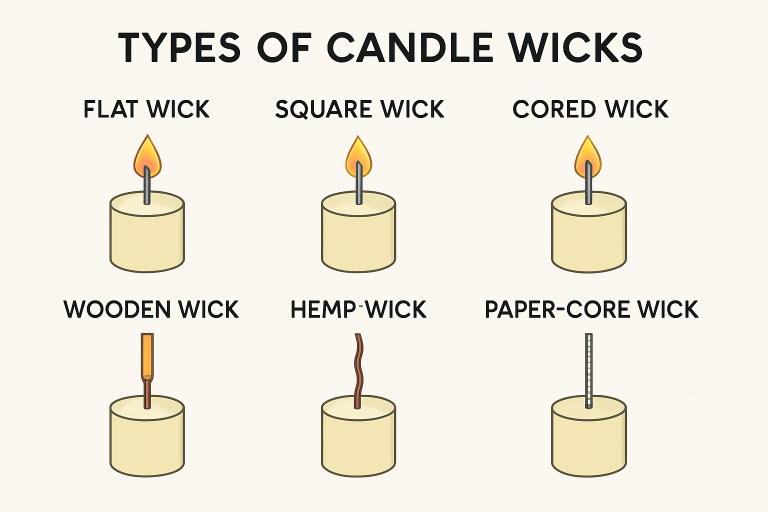
Cored Wicks
Cored wicks feature a central core made of cotton, paper, zinc, or tin. The core helps the wick hold its shape and remain upright as the candle burns. Cored wicks are ideal for container candles, pillar candles, and votives where melted wax can otherwise destabilize the wick. Each core type offers subtle differences—for example, paper cores provide extra rigidity, while metal cores can create a hotter flame suited for heavily fragranced candles. Their construction ensures consistent performance and an even, attractive wax pool.
Wooden Wicks
Wooden wicks have become highly popular for their visual appeal and soothing crackling sound. Available in single-ply, multi-layered, and decorative shapes, wooden wicks offer a unique ambiance. Correct trimming (to about 1/8 inch) before each burn is essential to keep the wick performing optimally, reduce debris, and promote a clean flame. Wooden wicks are especially suited to modern, design-focused container candles and pair well with natural wax blends.
Hemp Wicks
As eco-conscious consumers seek greener choices, hemp wicks have grown in popularity. Made from natural hemp fiber and often coated with beeswax, they burn cleanly and slowly, producing minimal smoke. Hemp wicks are preferred for all-natural and homemade candles, providing a steady, slow burn rate that releases fragrance evenly. Their sustainable, renewable source material adds to their appeal for environmentally friendly candle lovers.
Paper-Core Wicks
Paper-core wicks are constructed with a cotton exterior and a stiff paper core. The paper increases the wick’s burn temperature and rigidity, making these wicks ideal for votive and container candles. Paper-core wicks create a slightly hotter flame than all-cotton wicks, amplifying fragrance release in scent-heavy candles. Their dependable structure helps keep the wick centered and upright throughout the burn cycle.
How Wick Choice Affects Candle Burning
- Flame Size: The wick’s size determines how much wax is drawn up to fuel the flame. Too small, and the candle will tunnel; too large, and it may flicker or smoke excessively.
- Burn Time: Different wick materials and sizes impact how quickly a candle burns. Choosing a slow-burning wick can extend your candle’s life and enjoyment.
- Soot Production: Poorly sized or low-quality wicks can create black soot, leaving marks on walls and reducing air quality.
- Wax Pool Formation: The right wick will create a full, even wax melt pool, necessary for optimal fragrance throw and even wax use.
- Fragrance Release: Wick style influences how efficiently scent is distributed, with some options better suited to carrying heavy fragrance loads throughout a space.
Final Thoughts
Choosing the right wick is just as important as selecting your candle’s scent or design. By understanding how wick type affects burn quality, fragrance distribution, and safety, you can elevate your candle experience. Whether you prefer the soothing crackle of a wooden wick, the sustainability of hemp, or the reliability of a flat or cored wick, informed choices ensure longer-lasting enjoyment and a cleaner, more efficient burn. Paying attention to these details helps you create the perfect ambiance while maximizing both performance and safety in your home.

Ethan Harper is a tech enthusiast and AI researcher who explores the latest in artificial intelligence, machine learning, and emerging technologies. With a passion for breaking down complex concepts, Ethan helps readers stay ahead in the fast-paced world of tech.