
Cambridge, Massachusetts, United States
News Desk | International Affairs
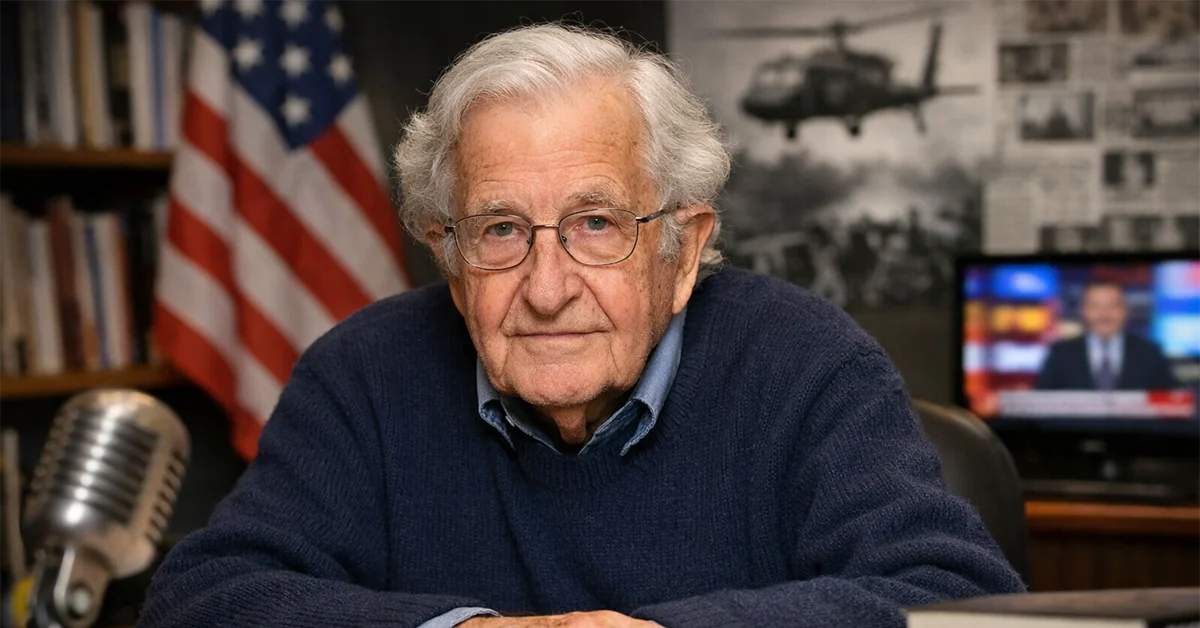
Noam Chomsky, the American linguist and political critic whose work reshaped modern linguistics and media analysis, continues to exert a significant influence on global debates decades after first gaining prominence. His theories on language, critiques of U.S. foreign policy, and analysis of mass media remain widely cited in academic research, journalism, and political discourse, according to scholars and publishers.
Noam Chomsky, born in 1928, rose to international prominence in the late 1950s with his theory of generative grammar, which transformed the study of linguistics by proposing an innate structure underlying human language. His academic career spanned more than half a century at the Massachusetts Institute of Technology, where he became one of the institution’s most influential scholars.
Beyond linguistics, Chomsky emerged as a leading public intellectual during the Vietnam War, sharply criticizing U.S. military interventions and government narratives. His 1988 book Manufacturing Consent, co-authored with Edward S. Herman, introduced a framework for analyzing how corporate ownership, advertising, and political power shape mainstream news coverage, a model still taught in media studies programs worldwide.
Publishers report that Chomsky’s political writings continue to see steady global readership, particularly amid renewed scrutiny of disinformation, geopolitical conflict, and the role of technology in shaping public opinion. Academics note that his work is frequently referenced in discussions about press freedom, democracy, and the responsibilities of intellectuals in public life.
In recent years, Noam Chomsky has largely withdrawn from public appearances, but his published work and past interviews continue to circulate widely online, influencing new generations of readers and activists. Universities and research institutions continue to host conferences and courses examining his linguistic theories and political critiques.
His supporters and critics alike agree that Noam Chomsky legacy occupies a rare position at the intersection of science, politics, and media, with lasting implications for how power and information are understood. The story is developing.
ALSO READ: CRM Stock Slides As Investors Weigh Salesforce Outlook Amid Tech Volatility
