

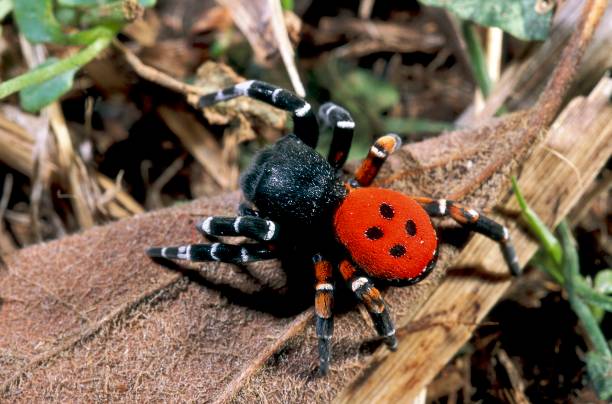
Clown spider is a type of spider that belongs to the family Theridiidae. Its scientific name is Thwaitesia argentiopunctata, and it’s native to Southeast Asia. This spider is known for its distinctive appearance, featuring a white or yellowish body with red or orange markings that resemble a clown’s face.
The Clown Spider’s Habitat and Behavior
The [clown spider] is typically found in tropical regions, where it inhabits areas with high humidity and abundant vegetation. These spiders are skilled hunters, using their webs to catch prey and protect themselves from predators. But what’s really interesting about the [clown spider] is its unique behavior, which has been observed in various studies.
Clown Spider’s Web-Slinging Abilities
One of the most fascinating aspects of the [clown spider] is its web-slinging abilities. These spiders use their webs to swing from one location to another, allowing them to traverse their environment with ease. This behavior has been likened to that of a [shangri-la frontier shark guy], effortlessly gliding through the air.
The Clown Spider in Popular Culture
The [clown spider] has also made its way into popular culture, with many enthusiasts sharing their experiences and photos of these spiders on social media. For example, a user once shared a photo of a [clown spider shangri la] on a forum, saying: “I was amazed by the intricate patterns on its body – it looked like a tiny work of art!”
The Pros and Cons of Keeping a Clown Spider as a Pet
For those interested in keeping a [clown spider] as a pet, there are both pros and cons to consider. On the one hand, these spiders are relatively low-maintenance and can be fascinating to observe. On the other hand, they require a specific environment and diet, which can be challenging to replicate.
Risks and Precautions
When handling a [clown spider], it’s essential to take precautions to avoid any potential risks. These spiders are venomous, although their venom is not typically life-threatening to humans. However, it’s still crucial to handle them carefully and avoid any sudden movements.
FAQs
Q: What does a clown spider look like?
A: A [clown spider] has a distinctive white or yellowish body with red or orange markings that resemble a clown’s face.
Q: Are clown spiders venomous?
A: Yes, [clown spiders] are venomous, although their venom is not typically life-threatening to humans.
Q: Can I keep a clown spider as a pet?
A: Yes, but it’s essential to research and understand their specific needs and requirements.
Q: How do clown spiders catch their prey?
A: [Clown spiders] use their webs to catch prey and protect themselves from predators.
Conclusion
Clown spider is a fascinating creature that continues to capture the imagination of many. With its striking appearance and intriguing behavior, it’s no wonder why this spider has become a popular topic of discussion.
CLICK HERE FOR MORE BLOG POSTS

John Authers is a seasoned and respected writer whose work reflects the tone, clarity, and emotional intelligence that readers value in 2025. His writing blends deep insight with a natural, human voice—making complex ideas feel relatable and engaging. Every piece he crafts feels thoughtful, original, and genuinely worth reading.