
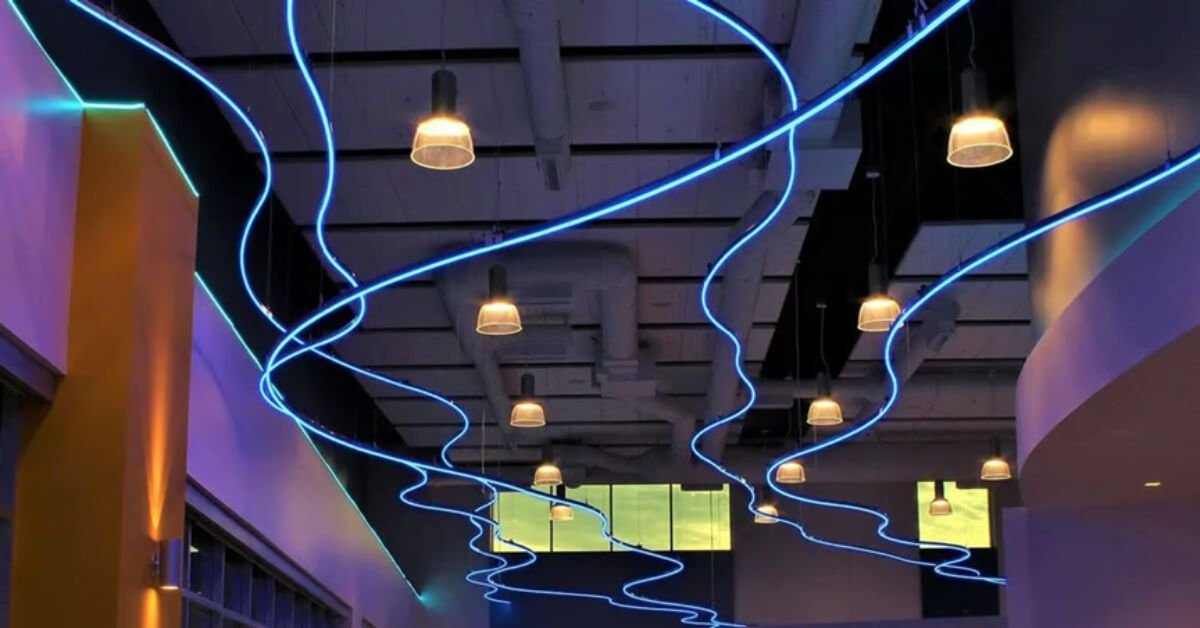
In the competitive landscape of modern retail and urban architecture, the battle for consumer attention is fought with light. For decades, the flickering hum of traditional glass neon was the pulse of the city. But as we move deeper into the 21st century, a silent revolution has taken place. The rigid, fragile, and energy-hungry glass tubes of the past have been replaced by a versatile, durable, and highly efficient successor: LED Neon Flex.
For architects and brand identity designers, this shift is not merely a change in hardware; it is an expansion of the creative horizon. The ability to manipulate light into complex geometries, embed it into sustainable building materials, and maintain brand color consistency across global locations has made the search for reliable LED strip wholesale partners a top priority for design firms worldwide.
The Aesthetic Evolution: From Retro to Ultra-Modern
Light is no longer just a functional requirement; it is a structural element. LED Neon Flex has liberated light from the “straight line” constraints of traditional lighting fixtures.
Seamless Linear Continuity
One of the primary frustrations with early LED products was the “pixelation” or “dotting” effect. Modern neon flex, particularly those sourced through high-end LED strip wholesale channels, utilizes advanced dense-array SMD or COB technology coupled with high-diffusion silicone jackets. This creates a perfectly smooth, “liquid” line of light that mimics the glow of gas-filled tubes without any dark spots.
Color Science in Branding
For a global brand like Starbucks or Ferrari, “close enough” is not acceptable when it comes to color. LED Neon Flex offers precise CCT (Correlated Color Temperature) and Binning control. Designers can now specify exact Pantone-matched hues or use RGBW (Red, Green, Blue, and White) systems to create dynamic lighting schemes that adapt to seasons, events, or time of day, all while maintaining the integrity of the brand’s visual identity.
Structural Advantages: Why Architects Prefer Flex
Architects face the dual challenge of form and function. A lighting solution must look beautiful, but it must also withstand the rigors of the environment and the complexities of installation.
Bendability and Form-Finding
Unlike glass, which requires a master craftsman and a blowtorch to shape, LED neon flex can be bent in the field.
- Top-Bend vs. Side-Bend: Professional LED strip wholesale suppliers offer different “bend axes.” Top-bend strips are perfect for following the curves of a vaulted ceiling, while side-bend strips allow designers to create intricate flat-plane lettering and logos on walls.
Durability in High-Traffic Areas
In hospitality and retail, fixtures are often within reach of the public. Glass neon is a significant liability due to its fragility and high-voltage requirements. LED neon flex, operating on low-voltage DC (12V or 24V), is cool to the touch and virtually unbreakable. Its silicone housing acts as a shock absorber, making it ideal for low-level accent lighting in hotels, bars, and shopping malls.
Case Studies: Transformative Applications
To understand the impact of this technology, we must look at how it is being integrated into the built environment.
Luxury Retail: The “Halo” Effect
High-end boutiques are increasingly using slim-profile neon flex to create “floating” shelves and halo-lit mirrors. By choosing ultra-slim LED strip wholesale options (as narrow as 4mm or 6mm), designers can hide the light source entirely, leaving only a soft, luxurious glow that elevates the perceived value of the merchandise.
Hospitality: Mood Mapping
In a recent hotel renovation in Dubai, designers utilized over 2,000 meters of Dim-to-Warm neon flex. During the day, the lighting is a crisp 4000K to energize the lobby; as the sun sets, the system shifts to a deep, amber 1800K. This level of atmospheric control is only possible through the integration of smart LED controllers with high-quality flexible neon.
The Sustainability Narrative: LEED and Beyond
In 2025, every architectural project is scrutinized for its environmental impact. LED Neon Flex is a cornerstone of “Green Lighting” strategies.
- Energy Efficiency: LED neon consumes approximately 70% to 80% less energy than traditional neon. For a large-scale commercial facade, this translates to a reduction of thousands of tons of CO2 over the product’s lifecycle.
- Longevity: With a lifespan often exceeding 50,000 hours, the replacement cycle is significantly longer than fluorescent or glass options, reducing landfill waste.
- Toxic-Free: Unlike traditional tubes that contain neon or argon gas and traces of mercury, LED neon flex is ROHS compliant and safe for both indoor and outdoor ecosystems.
Technical Specification for Designers
When an architectural firm engages in LED strip wholesale procurement, they must look for several technical markers to ensure the design intent is realized:
| Specification | Importance for Design |
| CRI (Ra) | High CRI (>90) is essential for accurate skin tones and product colors. |
| Lumen Output | Ensures the light is visible against high ambient sunlight in shop windows. |
| Cutting Unit | Smaller cutting units (e.g., every 1cm or 2.5cm) allow for more precise geometric shapes. |
| UV Resistance | Prevents the “yellowing” effect that can ruin the aesthetic of a white building facade. |
Overcoming Installation Challenges
A common pitfall in architectural lighting is the “visible cable” problem. Advanced neon flex systems now offer multiple entry points for power:
- Bottom Feed: Hidden wiring that goes directly through the mounting surface.
- End Feed: Standard connection for continuous runs.
- Side Feed: Useful for tight corners where space is at a premium.
By collaborating early with a LED strip wholesale manufacturer, architects can request customized “plug-and-play” connectors that simplify on-site labor and ensure the waterproof integrity (IP67) of the system is never compromised.
The Future: Addressable Neon and Kinetic Façades
The next frontier for brand identity is motion. Addressable LED neon flex (Pixel Neon) allows each segment of the tube to be controlled individually via DMX or Art-Net protocols. This turns a building’s exterior into a low-resolution video screen, capable of displaying flowing colors, brand patterns, or even subtle “breathing” light effects that respond to environmental triggers like wind or sound.
Conclusion: Strategic Sourcing for Creative Excellence
For the modern architect and designer, the light is the message. The transition to LED Neon Flex has provided the tools to create more immersive, sustainable, and vibrant environments than ever before. However, the success of these designs hinges on the quality of the light source.
Partnering with a dedicated LED neon strip wholesale provider is no longer just a task for the procurement department—it is a strategic design decision. By ensuring access to high-CRI, silicone-encapsulated, and technically superior neon flex, designers can ensure that their vision remains as bright and vivid on the tenth year as it was on the first night of the grand opening.
FAQ for Designers
Q: Can LED neon flex be dimmed?
A: Absolutely. Most professional-grade neon flex is compatible with 0-10V, TRIAC, DALI, and DMX dimming systems, allowing for total control over the space’s ambiance.
Q: Is it possible to use neon flex in curved architectural coves?
A: Yes, its flexibility makes it superior to rigid linear fixtures for curved coves. It provides a perfectly uniform wash of light without the “scalloping” effect.
Q: How does the heat output affect building materials like wood or acrylic?
A: LED neon flex generates very little heat. It is safe to embed in wood joinery or mount directly to acrylic signage without the risk of warping or fire, provided there is minimal airflow for ambient dissipation.
CLICK HERE FOR MORE BLOG POSTS

Ethan Cole is a passionate blogger at Aldalive.com, sharing fresh ideas and engaging content on lifestyle, technology, and everyday trends. With a love for writing and exploring new topics, Ethan aims to make information simple, useful, and inspiring for readers worldwide.