
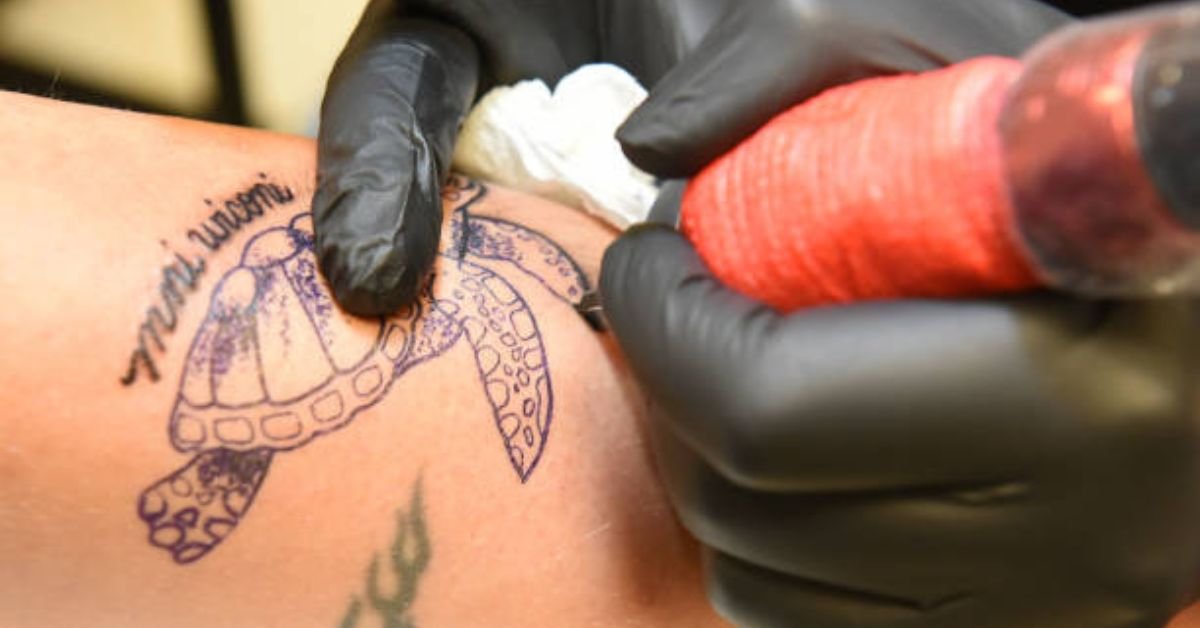
Few symbols carry as much quiet power as the turtle. Ancient, unhurried, and unyielding, the turtle has inspired body art across cultures for centuries — and it shows no sign of slowing down. Whether you are drawn to the turtle’s legendary wisdom, its protective shell, or simply its graceful glide through open water, a turtle tattoo is a deeply personal statement wrapped in timeless imagery.
We cover the rich symbolism and cultural roots of turtle tattoo designs, break down every major style from tribal Polynesian to delicate fine-line minimalism, walk you through the best placement options for any size, and answer the most common questions artists hear every day. Packed with turtle tattoo ideas for men and women alike, this is your roadmap from inspiration to ink.
The Deep Meaning Behind Turtle Tattoos
A turtle tattoo is never just a pretty design. Because the turtle appears in the mythology and spiritual traditions of nearly every seafaring and earth-bound culture, choosing one as a permanent mark means stepping into a story thousands of years old. Understanding what it means helps you choose a design that truly resonates.
Ancient Symbolism & Cultural Roots
The turtle’s meaning shifts subtly across cultures, but a few core ideas — wisdom, longevity, protection, and stability — appear again and again around the world.
| Culture | Core Symbolism |
| Native American | The turtle represents the Earth itself — often called Turtle Island — and embodies stability, grounding, and an unbreakable connection to nature. |
| Eastern (Chinese, Hindu) | In Chinese tradition, the turtle’s domed shell mirrors the heavens while its flat underbelly represents the earth, making it a symbol of cosmic order, harmony, and balance. |
| Polynesian (Honu) | The Hawaiian honu (green sea turtle) is revered as a guardian spirit, a bringer of good luck, and a guide for safe navigation. Family, strength, and mana are central themes in Polynesian and Maori turtle imagery. |
| Celtic | Celtic traditions link the turtle to perseverance, endurance, and the deep connection between the land and its people — a creature that carries its home wherever it travels. |
What a Turtle Tattoo Says About You Today
Beyond ancient roots, a turtle tattoo communicates a set of traits that feel deeply relevant in modern life. People drawn to turtle designs often share a few things in common: a calm, grounded personality that does not rush the important things; a resilient spirit that has learned to move forward despite setbacks; and a love for the ocean, nature, or travel that defines their sense of self.
Common modern associations include:
- Patience and tranquility — the ability to move at your own pace without apology.
- Resilience and endurance — surviving life’s storms while carrying your home on your back.
- Protection — a shield around yourself, your family, or your values.
- The journey of life — physical adventures, spiritual growth, or both.
- A love for the ocean, travel, or the natural world.
Top Turtle Tattoo Styles & Design Ideas
The style you choose shapes everything: how long the tattoo lasts, how much detail it can hold, and how it ages on your skin. Below are the six most popular turtle tattoo styles, with what makes each one distinctive and which type of person tends to love it most.
Realistic & 3D Turtle Tattoos
Realism tattoos aim to replicate a photograph on skin, and turtles — with their intricately patterned shells, expressive eyes, and textured flippers — are exceptional subjects for this style. A skilled realism artist can render a hawksbill sea turtle in such detail that the scales look three-dimensional, as if the animal is swimming just below the surface. These designs work best in larger formats: the shoulder, back, thigh, or chest. Black and grey realism tends to age more gracefully than full color, though vibrant ocean scenes with blue-green water and sun-dappled coral can be stunning. Expect a premium price tag — this style demands long sessions and an artist with a very specific, practiced skill set.
Best for: People who want a showpiece — a tattoo that will consistently draw a second look.
Top pairings: Ocean water, coral reef, tropical fish, waves, or an underwater scene.

Geometric & Dotwork Turtle Designs
Geometric turtle tattoos deconstruct the animal into its essential shapes — triangles, hexagons, and sacred geometry patterns — creating a design that feels simultaneously modern and mathematically ancient. The turtle’s shell, naturally hexagonal in its patterning, lends itself perfectly to this style. Dotwork tattoos build their imagery from thousands of individual dots, producing gradients and textures without any solid shading. A dotwork mandala integrated into a turtle’s shell is one of the most beloved combinations in contemporary tattooing.
Best for: Minimalists who still want visual complexity, or anyone drawn to sacred geometry and abstract art.
Top pairings: Mandala patterns, lotus flowers, compass roses, or fine-line geometric frames.
Tribal & Polynesian Turtle Tattoos
No design in this list carries more cultural weight. Traditional Polynesian and Maori turtle tattoos — executed in bold black ink with characteristic interlocking patterns — are more than aesthetic choices. Every element has meaning: the ocean waves speak to a life at sea, the chevrons represent protection, the enata figures speak of family and ancestors. If you are drawn to Polynesian tattoo style without personal cultural heritage, approach these designs respectfully and consider consulting an artist of that background to ensure your design is original and thoughtfully composed rather than appropriated.
Best for: Anyone with Polynesian heritage, surfers, ocean lovers, or those who value deeply symbolic body art.
Top pairings: Ocean waves, tiki patterns, shark teeth motifs, or a full sleeve of traditional Pacific imagery.
Traditional & Neo-Traditional Turtle Tattoos
Old school traditional tattoos are defined by their bold black outlines, limited but vibrant color palettes, and iconic sailor-era imagery. A classic traditional turtle tattoo tends to feature a slightly cartoonish, wide-eyed turtle in a simplified pose, surrounded by waves or anchors. Neo-traditional expands on this foundation with more varied line weights, richer color palettes, and greater illustrative detail — think of it as traditional with a fine art sensibility. Both styles age exceptionally well, which is one reason they remain perennial favorites.
Best for: Tattoo enthusiasts who love the history of the craft and want a design that will look great for decades.
Top pairings: Anchors, compasses, ships, nautical roses, hibiscus, or bold flash-style lettering.
Watercolor & Artistic Turtle Tattoos
Watercolor tattoos mimic the loose, expressive quality of painted artwork — soft washes of color bleeding into one another, brush strokes suggested rather than defined. On a turtle, this style creates an almost ethereal quality, as if the animal is dissolving into an ocean or emerging from a splash of color. Teal, turquoise, and cobalt blues are naturally beautiful choices, but artists also create striking designs using sunset palettes (warm oranges and purples) or tropical greens and yellows. One important caveat: watercolor tattoos without solid black foundations tend to fade faster than other styles, so discuss longevity strategies with your artist before committing.
Best for: Art lovers, creative spirits, and anyone who wants a tattoo that looks like a painting rather than a classic tattoo.
Top pairings: Flowers (hibiscus, lotus, plum blossom), splashes, abstract color fields, or fine-line outlines with loose watercolor fills.
Minimalist & Small Turtle Tattoos
Sometimes the most powerful designs are the simplest. A fine-line turtle outline on the inside of a wrist, a tiny sea turtle on an ankle, or a single-needle sketch on the inner forearm — these small turtle tattoos trade scale for precision and intimacy. Minimalist designs are ideal for first tattoos, for people who work in professional environments that discourage visible tattoos, and for anyone who wants something personal rather than showy. The key with small fine-line work is choosing a highly skilled artist; thin lines require a delicate touch and will spread slightly over time, so the simpler the design, the better it ages.
Best for: First-timers, professionals, minimalists, or anyone who wants a subtle, meaningful mark.
Top pairings: A single line of waves, a tiny sun or moon, a small compass, or simply the animal alone.
Finding the Perfect Placement for Your Turtle Tattoo
Placement is one of the most consequential decisions you will make, affecting the size of design possible, how much the process hurts, how visible the tattoo is in daily life, and how well it ages over time. Use the guide below to narrow your options based on what matters most to you.
Best Spots for Small Turtle Tattoos
Small turtle designs (roughly thumb-sized or smaller) thrive in these locations:
- Wrist (inner or outer) — always visible to you, great for personal significance.
- Ankle — subtle, elegant, and works beautifully with fine-line or minimalist styles.
- Behind the ear — discreet and deeply personal, ideal for very small designs.
- Finger — extremely subtle; note that finger tattoos fade faster than most placements.
- Inner forearm — visible when you want it to be, easy to cover with long sleeves.
Ideal Placements for Medium to Large Designs
If you want a detailed design — realistic, geometric, Polynesian, or a full scene — you need more canvas. These placements offer the space to do the design justice:
- Shoulder (cap or blade) — a natural showcase for circular designs and tribal patterns.
- Upper back — the largest and flattest canvas on the body, ideal for elaborate scenes.
- Thigh (outer) — spacious, intimate, and ideal for detailed work that you can choose to show or hide.
- Chest — deeply personal placement; works well for designs with meaningful symbolism.
- Calf — excellent visibility and a firm surface that holds detail well.
- Full sleeve — a long-term commitment that lets you build an entire ocean or nature theme.
Placement Considerations: Pain & Visibility
Pain level is determined by how close a placement is to bone and how thin the skin is in that area. The least painful spots for a turtle tattoo are the outer thigh, calf, and upper outer arm — these areas have more muscle and fat to absorb the needle. More painful spots include the ribs and the sternum (thin skin over bone), the foot and ankle (bone-adjacent), and the inner wrist (thin skin with nerve endings nearby). The ditch of the elbow and the back of the knee are considered particularly sensitive.
For visibility, consider your workplace. A forearm tattoo is visible in short sleeves; an ankle tattoo shows in sandals or shorts; a wrist tattoo is almost always visible. The back, thigh, and chest are easy to keep private. Most professional environments have relaxed their policies around tattoos significantly in recent years, but it is worth thinking through visibility before committing to a placement you might later regret.
Turtle Tattoo Color Palette: Black & Grey vs. Vibrant Color
One of the first decisions your artist will ask you to make is whether you want your tattoo in black and grey or full color. Both are beautiful choices with different strengths.
Black & Grey
Black and grey tattoos age more gracefully than color work, maintain their contrast for longer, and suit a wide range of skin tones. They also tend to look more classically elegant — less of the moment, more timeless. Realism, geometric, and fine-line designs particularly shine in black and grey. If you want your turtle to still look sharp in 20 years with minimal touch-up, this is generally the safer choice.
Vibrant Color
Color tattoos let you capture the actual blues and greens of a sea turtle, the vivid reds and yellows of a traditional design, or the painterly wash of a watercolor piece. The trade-off is that color tattoos require more sun protection and more frequent touch-ups over time, particularly lighter colors like yellow and pink. On darker skin tones, richer pigments (deep blues, teals, and reds) hold better than pastels. If color is important to your concept — say, a Caribbean ocean scene or a Hawaiian-inspired design — commit fully rather than going halfway.
Elements to Combine with Your Turtle Tattoo
The turtle is a powerful anchor for a larger composition. Pairing it with complementary elements creates a richer story and can make a small, simple design feel part of a bigger world.
Ocean & Nature Themes
The most natural companions for a sea turtle tattoo are the elements of its world:
- Waves — a classic pairing that speaks to the ocean, travel, and life’s ebb and flow.
- Koi fish — a Japanese-inspired combination that layers meanings of perseverance and good fortune.
- Coral and seaweed — for a fully realized underwater scene.
- Hibiscus or tropical flowers — adds warmth and color, popular in Hawaiian-style designs.
- Lotus — a spiritual pairing symbolizing purity emerging from murky waters.
- Palm tree and island — a minimalist take on paradise and wanderlust.

Symbolic & Spiritual Additions
For designs with a deeper conceptual or spiritual dimension:
- Compass — a guide turtle with a compass overlay speaks to navigation, direction, and purpose.
- Sun and moon — adds a cosmic or spiritual dimension, particularly beautiful in mandala-style work.
- Stars and constellations — ancient sea turtles navigated by the stars; this pairing is historically resonant.
- Mandala — integrates seamlessly into a geometric shell design.
- Anchor — grounds the sea turtle in classic nautical imagery.
- Dreamcatcher — a meaningful combination for those drawn to Native American symbolism.
Frequently Asked Questions About Turtle Tattoos
1. Do turtle tattoos have a specific meaning?
Yes — and the meanings are overwhelmingly positive. Across cultures, turtle tattoos symbolize wisdom, longevity, protection, patience, and endurance. In many traditions, the turtle represents stability and an unshakeable connection to the earth. The specific meaning of your design will also depend on the style and elements you choose: a Polynesian honu design carries different connotations than a minimalist fine-line turtle, even though both feature the same animal.
2. What does a sea turtle tattoo specifically symbolize?
A sea turtle tattoo is most strongly associated with the ocean, travel, freedom, and guidance. The sea turtle spends its entire life navigating vast open waters, returning instinctively to the beach where it was born — making it a powerful symbol for a life of adventure, trust in your own instincts, and always finding your way home. In Hawaiian and broader Polynesian cultures, the honu (green sea turtle) also symbolizes good luck and acts as a personal guardian spirit.
3. Where is the best place to get a small turtle tattoo?
The best placements for small turtle tattoos are the wrist (inner or outer), ankle, behind the ear, finger, and inner forearm. All of these locations suit designs that are thumb-sized or smaller. The wrist and ankle offer the best balance of visibility, pain tolerance, and design longevity — fine-line details on fingers fade faster than almost any other placement due to constant hand-washing and friction.
4. Are turtle tattoos more popular for men or women?
Turtle tattoos are genuinely unisex and popular across all genders. That said, certain styles do skew in their appeal. Bold tribal and Polynesian designs, large-scale realism, and neo-traditional styles are more commonly chosen by men. Watercolor, delicate fine-line, and minimalist turtle designs tend to be more popular among women. Geometric and dotwork styles sit squarely in the middle, beloved by everyone.
5. How much does a turtle tattoo typically cost?
Tattoo pricing depends on four main variables: size, complexity, the artist’s experience level, and geographic location. A simple small turtle tattoo from a competent local artist might cost between $80 and $200. A medium-sized detailed design (say, a geometric turtle on the forearm) typically falls in the $200–$500 range. Large, complex pieces from sought-after artists — a full-back realism piece or an elaborate Polynesian sleeve — can run $1,000–$5,000 or more. Always get a quote in advance, and never choose an artist based on price alone.
6. What are Polynesian turtle tattoo meanings (honu)?
In Hawaiian tradition, the honu (green sea turtle) is one of the most sacred symbols. It represents good luck, peace, and longevity. The Polynesian people were some of the greatest ocean navigators in human history, and the turtle — which migrates thousands of miles unerringly — embodied their connection to the sea and their skill at navigation. In Maori ta moko (traditional tattoo) traditions, turtle motifs relate to family lineage, spiritual protection, and mana (personal power and prestige).
7. Do turtle tattoos hurt?
The turtle design itself does not affect the pain level — placement does. A turtle tattoo on the outer thigh or the upper arm will be quite manageable; the same design on the ribs, sternum, or foot will be significantly more intense. As a general rule, areas with more muscle and fat cushioning hurt less; areas close to bone or with thin skin hurt more. If this is your first tattoo and you are concerned about pain, start with a placement like the outer forearm or calf.
8. Can I combine a turtle with other elements?
Absolutely — and it is one of the best ways to make your design truly personal. Turtles pair beautifully with ocean waves, tropical flowers (hibiscus, lotus), koi fish, mandalas, compasses, suns and moons, and Polynesian patterns. The key is to choose a combination that tells a coherent visual story. Work with your artist in the consultation to sketch out a composition before committing — the best tattoos are planned, not improvised.
Ready to Get Your Turtle Tattoo? Next Steps
With your style, placement, and symbolism in mind, you are ready to take the next step: finding the right artist. This is arguably the most important part of the process. Not every tattoo artist excels at every style — a specialist in realism may produce underwhelming results with watercolor, and vice versa. Research artists in your area by browsing their Instagram portfolios with fresh eyes. Look specifically for examples of the style you want, not just attractive tattoos in general.
Book a consultation before your appointment. Bring reference images, be honest about your budget and timeline, and listen to the artist’s feedback. A great tattoo artist is a collaborator, not just an executor of instructions. They will often have suggestions that make your design significantly better. Trust their expertise on sizing, placement-specific adjustments, and what will look best years from now, not just on the day.
CLICK HERE FOR MORE BLOG POSTS

John Authers is a seasoned and respected writer whose work reflects the tone, clarity, and emotional intelligence that readers value in 2025. His writing blends deep insight with a natural, human voice—making complex ideas feel relatable and engaging. Every piece he crafts feels thoughtful, original, and genuinely worth reading.