
United States
News Desk | Aviation
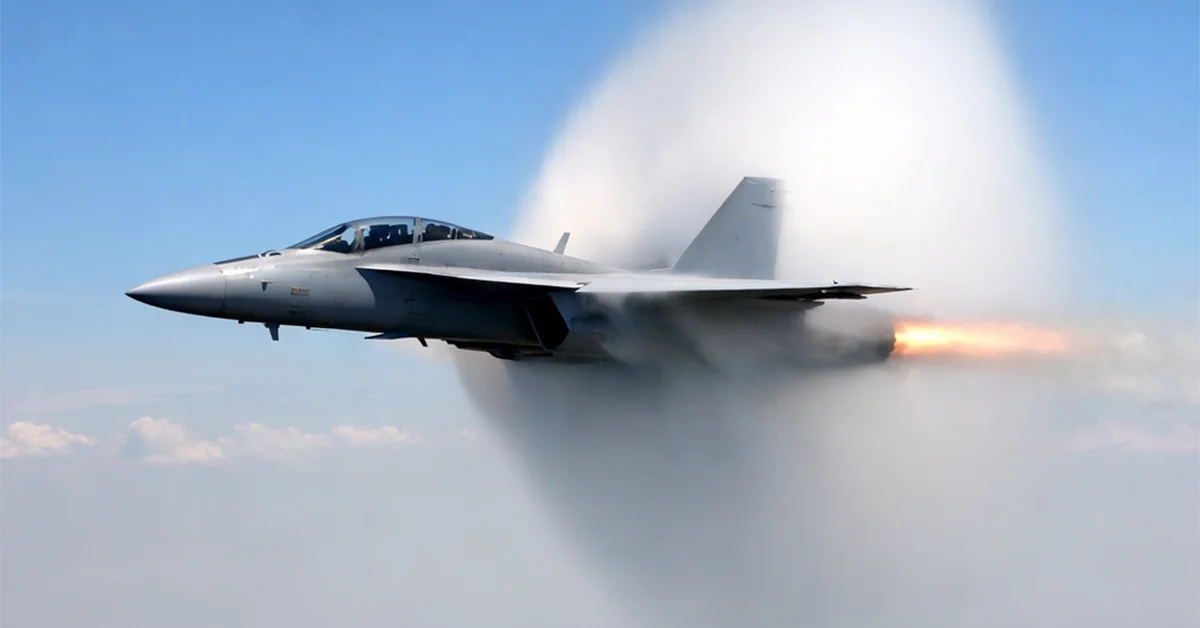
A sonic boom is the thunder-like noise produced when an aircraft travels faster than the speed of sound, creating shock waves that reach the ground. Aviation experts say the phenomenon occurs when pressure waves merge, often during military training, high-altitude testing, or historic commercial supersonic flights. Regulators closely monitor such events because of potential impacts on communities below.
The sound barrier is exceeded when an aircraft surpasses Mach 1, roughly 1,235 kilometers per hour at sea level, according to aerospace engineers. At that point, compressed air forms a cone of pressure that trails the aircraft, releasing a sudden, loud boom as it passes observers on the ground.
In the United States, supersonic flight over land has been restricted for decades. The Federal Aviation Administration prohibits civilian aircraft from exceeding the speed of sound above populated areas due to noise complaints and structural concerns. Military aircraft may be authorized for supersonic speeds during designated exercises or in restricted airspace.
Research agencies are working to reduce the impact of sonic booms. The NASA has been testing experimental aircraft designed to produce a quieter “low-boom” signature, aiming to make future supersonic travel more acceptable for communities. Officials say the goal is to replace the sharp crack of a traditional boom with a softer thump.
Public awareness of sonic booms increased during the era of the Concorde, which operated transatlantic flights from 1976 until 2003. The aircraft was limited to supersonic speeds over oceans, highlighting the longstanding challenges of balancing speed and noise.
Authorities typically investigate reports of loud sonic boom to determine whether they were caused by authorized aircraft activity, atmospheric conditions, or unrelated phenomena. Officials advise residents to report incidents to local authorities, who can coordinate with aviation regulators for verification.
As governments and aerospace companies revisit supersonic technology, regulators say any expansion of high-speed flight will depend on proven reductions in noise and clear safety standards. The story is developing.
ALSO READ: Colleen Hoover Cancer Diagnosis Disclosed As Author Nears End Of Treatment
