
Today’s competitive digital economy demands agile, always-on connectivity that keeps businesses running efficiently. However, many enterprises are finding that legacy network architectures cannot deliver the level of performance, flexibility, and reliability required to support cloud applications, remote workers, and evolving security needs. This has led to a surge in the deployment of Software-Defined Wide Area Network (SD-WAN) technologies, which are designed to address these modern requirements. For a clear breakdown of how SD-WAN changes the game for business connectivity, read SD-WAN explained.
Unlike traditional WANs, SD-WAN enables organizations to centrally manage, secure, and optimize their wide-area networks through software-based controls and intelligent routing. This shift is revolutionizing the way enterprises approach network infrastructure, enabling greater efficiency and responsiveness in a rapidly changing business landscape.
As enterprises pursue digital transformation, network traffic is increasingly dispersed across multiple locations, data centers, and cloud environments. The flexibility of SD-WAN enables seamless integration with modern infrastructures, driving business outcomes by aligning network operations with strategic goals.
IT leaders are choosing SD-WAN not only for its technical advantages but also for its ability to contain costs, enhance productivity, and accelerate innovation. Organizations adopting SD-WAN see measurable improvements in application performance and user satisfaction.
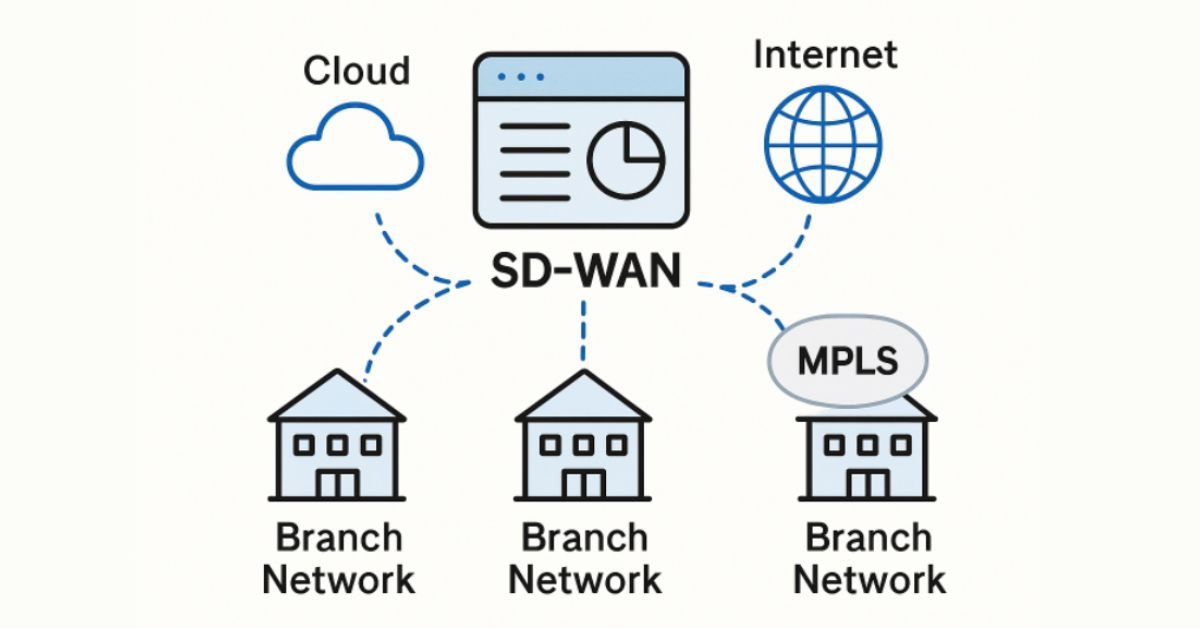
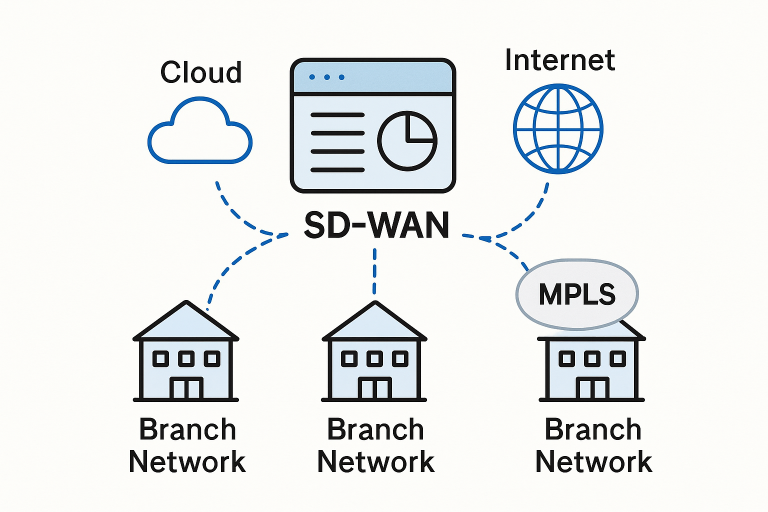
SD-WAN is a software-based approach to managing the WAN that separates the network’s control layer from the underlying hardware. By abstracting network management from physical devices, SD-WAN enables businesses to leverage a diverse mix of connectivity options—including MPLS, broadband internet, and LTE—while maintaining centralized control over policy. It dynamically selects the optimal path for each application’s traffic based on real-time network conditions and application-specific requirements, resulting in enhanced performance and resilience.
Core Features of SD-WAN
- Virtualized network overlay for simplified orchestration
- Centralized policy-based management
- An agnostic approach to access technology (MPLS, broadband, LTE, etc.)
- Application-aware traffic steering and dynamic path selection
- Integrated security features such as encryption and threat protection
Benefits of SD-WAN
The adoption of SD-WAN delivers numerous advantages that align with the goals of modern enterprises:
- Enhanced Performance: SD-WAN steers traffic based on real-time data, prioritizing critical business applications to ensure fast and reliable access to cloud and SaaS resources. This results in minimal downtime and a superior end-user experience.
- Cost Efficiency: By leveraging lower-cost broadband connections alongside or in place of expensive MPLS links, organizations can optimize their network spending without sacrificing performance or security.
- Simplified Management: Centralized orchestration reduces IT complexity, enabling the rapid deployment of new sites and services with minimal manual intervention.
- Improved Security: Built-in security capabilities, including secure VPNs, firewalling, and intrusion detection, ensure that sensitive data remains protected across all network endpoints.
According to Cisco’s SD-WAN overview, organizations see measurable improvements in application performance and user satisfaction after adopting SD-WAN solutions.
SD-WAN vs. Traditional WAN
Traditional WAN infrastructures are typically built on private MPLS circuits and static, hardware-driven configurations. They require extensive manual setup, are challenging to scale, and often lack the intelligence to reroute traffic dynamically. In contrast, SD-WAN empowers IT with centralized management, automates network decisions, and leverages multiple connectivity options to enable true business-grade resilience.
Key Differences
- Traditional WAN: Static, MPLS-centric, hardware-intensive
- SD-WAN: Dynamic, hybrid connectivity, software- and policy-driven
- Traditional WAN: Complex rollout and changes
- SD-WAN: Streamlined deployments, instant policy updates across locations
This evolution is driving businesses to phase out legacy networks in favor of agile, future-ready architectures.
Industries Adopting SD-WAN
The versatility of SD-WAN has led to widespread adoption in sectors where agility, security, and reliability are critical. Healthcare organizations rely on SD-WAN to accelerate secure access to electronic health records and telemedicine platforms. Retailers benefit from consistent uptime for point-of-sale systems and seamless omnichannel experiences across all locations. Financial institutions are turning to SD-WAN for encrypted, compliant transaction processing and enhanced branch connectivity.
Additional industries, including education, manufacturing, and logistics, are realizing significant benefits by modernizing their networks with SD-WAN technology.
Key Considerations for Implementation
Successful SD-WAN deployment requires thoughtful planning and a clear understanding of business objectives. Key factors to address include:
- Network Assessment: Conduct a comprehensive review of the current network infrastructure and applications that require optimization.
- Vendor Selection: Choose a solution provider that offers robust support, seamless interoperability, and alignment with your organizational needs.
- Security Integration: Ensure the platform integrates advanced security measures, including end-to-end encryption and threat intelligence.
- Scalability: Opt for a solution designed to scale in line with business growth and adapt as network demands evolve.
Involving cross-functional teams and phasing the rollout can help speed adoption and mitigate risks.
Future of SD-WAN
The SD-WAN landscape continues to grow as businesses recognize the value of integrated network and security solutions. According to Dell’Oro Group, the global Secure Access Service Edge (SASE) market, which includes SD-WAN, reached $2.6 billion in Q4 2024, experiencing robust double-digit year-over-year growth. This surge highlights a clear trend: enterprises are prioritizing network simplicity, enhanced user experiences, and comprehensive security frameworks for future success.
The convergence of SD-WAN, network security, and cloud-based management platforms is expected to become standard, helping enterprise networks remain agile, secure, and scalable for years to come.
Conclusion
SD-WAN represents a modern and powerful approach to enterprise network connectivity, combining agility, cost savings, and security for organizations of all sizes. By taking proactive steps to evaluate needs, choose the right solution, and ensure effective implementation, enterprises can unlock the true potential of their network infrastructure—positioning themselves to lead in the digital age.

Ethan Cole is a passionate blogger at Aldalive.com, sharing fresh ideas and engaging content on lifestyle, technology, and everyday trends. With a love for writing and exploring new topics, Ethan aims to make information simple, useful, and inspiring for readers worldwide.