

In today’s fast-paced and technology-driven society, it has become increasingly important to make education and skill development an ongoing process. As digital technologies and global industries transform how we live and work, the concept of lifelong learning is not just a trend. It is fundamental to maintaining relevance, securing employment, and enabling personal growth. Opportunities like MSU Innovative Learning have made it easier than ever to access flexible training, giving individuals from all backgrounds the chance to evolve alongside the world around them.
The rapid pace of change seen in major sectors such as healthcare, finance, engineering, and even the creative arts means that a single qualification or degree is no longer enough. The ability to upskill and adapt is what separates those who thrive from those who struggle to keep up. Lifelong learning ensures that you are always prepared, whether for new job opportunities, career pivots, or simply staying competitive in an evolving marketplace.
While traditional four-year degrees and formal training still play a role, they are now part of a much broader set of educational tools. Modern learners have access to stackable micro-credentials, digital badges, and on-demand courses that deliver practical skills much faster. Flexible pathways support different life stages, allowing everyone from new graduates to retirees to find learning solutions that fit their schedules and ambitions.
Adapting to Technological Advancements
The impact of emerging technologies on daily life and the workplace cannot be overstated. Automation and artificial intelligence are transforming nearly every industry, requiring new expertise and shifting the skills gap every year. According to a report from McKinsey, as many as 375 million workers worldwide may need to switch occupational categories and learn new skills by 2030. Lifelong learning allows workers and professionals to stay nimble as job requirements evolve, building resilience for careers that may look very different from what they imagine today.
By regularly updating their knowledge base and embracing technological change, lifelong learners avoid stagnation. They are also better positioned to help organizations implement new systems and adopt best practices, making them invaluable as both problem solvers and innovators.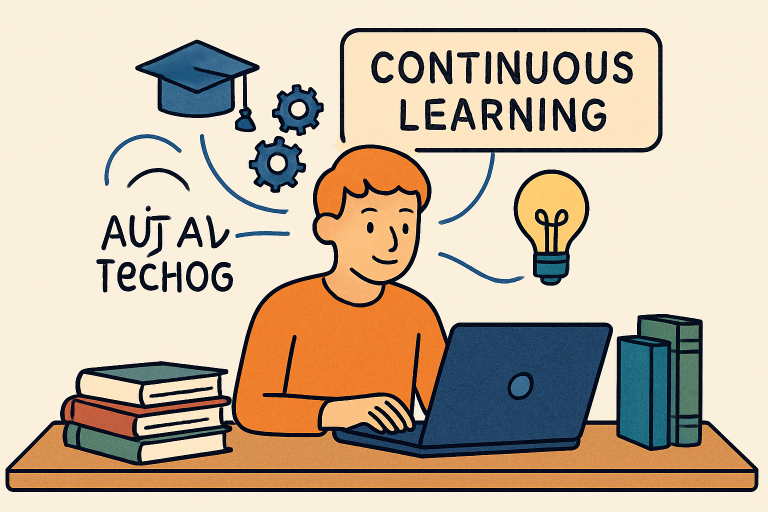
Flexible Learning Pathways
Modern education is increasingly decentralized and tailored to fit around full-time work, family responsibilities, and other life demands. Platforms like Coursera, edX, and LinkedIn Learning are frequently used by professionals who want to retrain or expand their skill sets on their own terms. The micro-credential movement, championed by various institutions, empowers learners to target job-specific skills in a practical, time-efficient way.
Universities and training providers now see value in making lifelong education part of their core mission. This shift ensures greater accessibility and inclusivity. Whether pursuing a short workshop or a professional certification, learners no longer have to choose between work, family, and education. Individuals who continuously upgrade their skills can better adapt to market changes and new opportunities, becoming lifelong contributors to the economy and society.
Employers’ Perspective on Lifelong Learning
Employers are increasingly prioritizing skills such as adaptability, analytical thinking, and emotional intelligence. In fact, 44% of workers’ core skills are projected to change by 2025, according to the World Economic Forum. This expectation is not just about technical know-how but also about cultivating a culture of continual learning. Workers who demonstrate this commitment to growth position themselves as versatile professionals, ready to handle evolving roles and emerging industry demands.
Organizations benefit from a growth mindset culture, as teams that learn together are better at problem-solving and agile responses to market shifts. Employers are therefore investing more in professional development programs, tuition reimbursement, and access to online learning tools, making it easier for employees to pursue new areas of expertise without leaving their current jobs.
Educational Institutions’ Response
The educational landscape is shifting to meet the needs of a more diverse student body. According to the National Center for Education Statistics, the number of students aged 25 or older is steadily increasing. This trend requires institutions to provide flexible options, such as evening classes, online modules, and family-friendly support services. Today’s universities serve not just recent high school graduates, but also working professionals, parents, and retirees who are looking to switch careers, remain active in the workforce, or simply explore new interests.
Programs and support systems are being redesigned to ensure that every learner, regardless of their background or current life stage, can find a suitable pathway. Campuses are becoming places where intergenerational collaboration and lifelong learning are the new norms, preparing everyone for the realities of our rapidly evolving world.
Strategies for Lifelong Learning
Adopting a lifelong learning mindset requires dedication and strategy. Here are actionable steps to ensure success:
- Set Clear Learning Goals: Know what you want to achieve and establish achievable milestones.
- Leverage Online Resources: Use free and paid courses from reputable platforms to advance your knowledge at your own speed.
- Join Professional Networks: Interact with peers through associations, seminars, and local meetups to share ideas and trends in an ongoing way.
- Seek Feedback: Regularly request feedback from colleagues and mentors to spot areas for growth.
- Stay Curious: Remain open to new concepts, experiment with unfamiliar topics, and nurture curiosity throughout your career.
Final Thoughts
The world is changing at a dizzying speed, but through lifelong learning, everyone can turn uncertainty into opportunity. Continuous education, flexible pathways, and support from both institutions and employers enable individuals to face challenges with confidence. Whether through targeted online courses, micro-credentials, or collaborative learning environments, committing to lifelong learning remains the surest route to a future of adaptability and personal satisfaction.
CLICK HERE FOR MORE BLOG POSTS

Liam is a freelance writer, blogger, and digital media journalist. He has a management degree in Supply Chain & Operations Management and Marketing and boasts a wide-ranging background in digital media.