
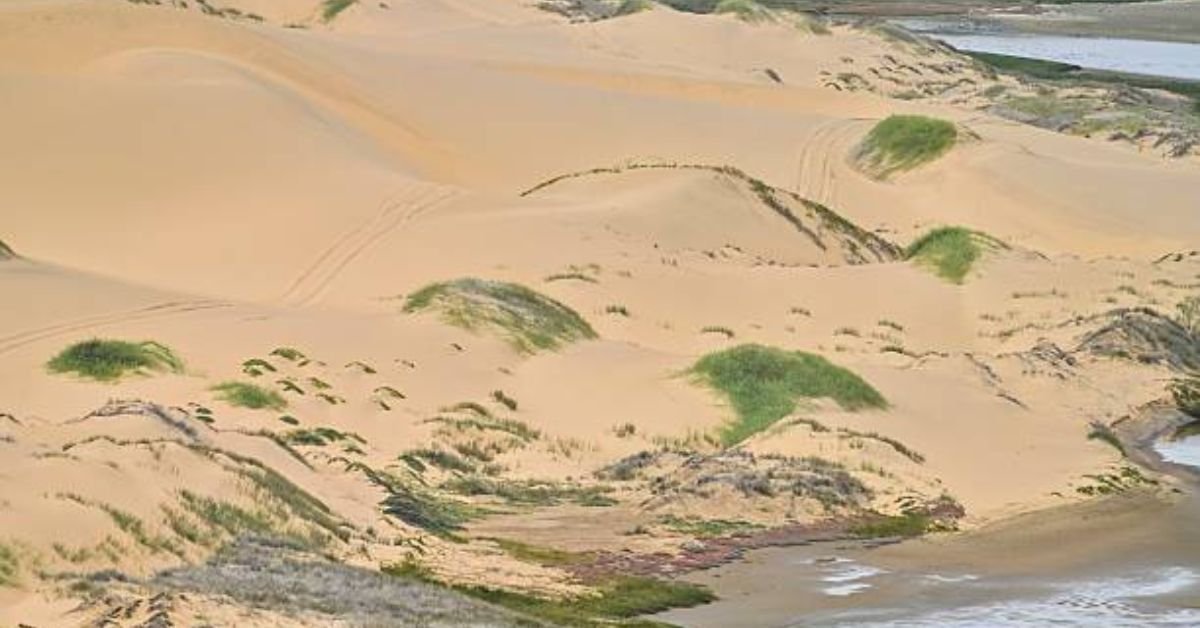
Desert food web fighting for existence. It is a high-stakes game of survival where every drop of water counts and every creature is both a hunter and the hunted.Most people assume deserts are empty wastelands. But if you pause and look closer, you realize the desert is actually loud with life. It’s just playing by a different set of rules. From the microscopic bacteria in the soil to the soaring hawk scanning for a meal, the connections here are tight, fragile, and fascinating.
The Architecture of Aridity: What is a Desert Food Web?
At its core, a food web is nature’s way of recycling energy. In a lush rainforest, resources are abundant. In the desert, the economy of energy is brutal. A desert food web represents the intersecting food chains within a desert ecosystem.
Think of it as a messy, tangled net rather than a straight line. A straight line (a food chain) suggests that A eats B, and B eats C. But in the wild, A might eat B, C, and D, while being hunted by E and F.
In the desert, this web is defined by scarcity. Because water is rare, plant life (biomass) is limited. Fewer plants mean fewer plant-eaters, which means fewer predators. This makes the web much more fragile than in other biomes. If you pull one thread—say, a specific species of beetle goes extinct—the ripple effect can be catastrophic.
The Foundation: Producers and the Sun’s Energy
Every food web starts with the sun. It is the battery that powers the planet. In the desert, however, the sun is both a giver of life and a potential killer.
The “Producers” (autotrophs) are the plants that convert solar energy into food through photosynthesis. But doing this without losing all their water requires some serious evolutionary hacks.
The Cacti and Succulents
You can’t talk about deserts without mentioning the heavy hitters like the Saguaro or the Prickly Pear. These aren’t just spiky decorations; they are water towers. They have thick, waxy skins to keep moisture in and spines to keep thirsty animals out.
The Ephemerals
Then you have the wildflowers. These guys are the gamblers of the desert. They exist as seeds in the dirt for years, sometimes decades, waiting for that one perfect rainstorm. When it hits, they explode into bloom, drop new seeds, and die, all within a few weeks. It’s a frantic rush that provides a massive, temporary buffet for insects and herbivores.
The Shrubs
Plants like the Creosote bush or Sagebrush are the steady workers. They have deep root systems that mine the earth for groundwater. They provide the shade that is absolutely critical for the survival of smaller animals.
Visualizing the Chaos: The Desert Food Web Diagram
If you were to sketch a desert food web diagram, it would look like a chaotic map of arrows. The arrows always point in the direction the energy flows (from the eaten to the eater).
At the bottom, you have your producers (Cactus, Grass, Shrubs).
Drawing arrows up, you hit the Primary Consumers. These are the vegetarians. In a desert, this crew includes:
- Kangaroo Rats
- Desert Tortoises
- Insects (Ants, Beetles)
- Jackrabbits
From there, the arrows split and cross. The Secondary Consumers enter the chat. These are the carnivores or omnivores that eat the vegetarians.
- Lizards (eat insects)
- Tarantulas (eat insects)
- Snakes (eat rodents)
Finally, at the very top, the arrows converge on the Tertiary Consumers (Apex Predators).
- Hawks and Eagles
- Coyotes
- Mountain Lions (in some deserts)
But here is the thing: the arrows don’t just go up. They also loop back down. When a hawk dies, it doesn’t just disappear. Decomposers (bacteria, fungi, termites) break it down, returning nutrients to the soil for the plants. The circle of life isn’t just a catchy song; it’s a recycling program.
The Primary Consumers: Life at the Bottom of the Menu
Being a small herbivore in the desert is a stressful job. You are everyone’s snack. To survive, animals like the Kangaroo Rat have developed superpowers.
Did you know the Kangaroo Rat can go its entire life without drinking a single drop of water? It’s true. They get all the moisture they need from the seeds they eat. They also have specialized kidneys that recycle water so efficiently that their urine is almost a paste.
Then there are the insects. Ants and beetles are the unsung heroes here. They move massive amounts of soil, aerating the ground so that when it does rain, the water sinks in rather than flashing off the surface. Without these tiny bugs, the producers wouldn’t grow, and the whole desert food web would collapse.

Desert Food Web Examples
To really understand this, we need to look at specific ecosystems. A desert in Arizona looks very different from a desert in Africa.
The Sonoran Desert (North America)
Here, the web might look like this:
- Producer: Prickly Pear Cactus.
- Consumer: A Javelina (looks like a pig, but isn’t) eats the cactus pads.
- Predator: A Mountain Lion hunts the Javelina.
The Sahara Desert (Africa)
- Producer: Date Palm.
- Consumer: Jerboa (a jumping rodent).
- Predator: Fennec Fox (those ears help dissipate heat!).
- Apex: Horned Viper.
These desert food web examples show that while the players change, the roles remain the same. Nature fills every niche.
The Middle Management: Secondary Consumers
This is where things get scaly. Reptiles rule the middle of the desert food web. Being “cold-blooded” (ectothermic) is actually a huge advantage here. Mammals burn a ton of calories just trying to keep their body temperature steady. Reptiles? They just borrow heat from the sun.
Because they don’t need to eat as often to fuel an internal furnace, snakes and lizards can thrive in places where food is scarce. A Rattlesnake can wait weeks for a meal. This low-energy lifestyle is perfect for the desert economy.
Lizards, like the Horned Toad (actually a lizard) or the Chuckwalla, act as crucial bridges. They eat the bugs and plants, concentrating that energy into a nice protein-packed snack for the bigger predators.
The Apex: Predators of the Sands
At the top of the chart sit the masters of the desert.
The Coyote
The ultimate opportunist. Coyotes will eat anything: rabbits, snakes, fruit, even trash. This flexibility makes them incredibly resilient. In the food web, they keep the rodent populations in check. Without coyotes, we’d be knee-deep in rats.
Birds of Prey
Red-tailed Hawks and Golden Eagles patrol the skies. They don’t have to worry about the hot ground; they can spot a movement from a mile away. They serve as the cleanup crew and the population controllers.
Simplicity in Action: A Desert Food Chain 5 Animals Breakdown
Sometimes the web is too messy, and you just want to see a clear line of energy transfer. If you are looking for a classic desert food chain 5 animals lineup, here is a perfect example from the American Southwest:
- The Producer: Desert Marigold (Uses sun to grow).
- Primary Consumer: Harvester Ant (Eats the seeds of the marigold).
- Secondary Consumer: Texas Horned Lizard (Eats the ants—lots of them!).
- Tertiary Consumer: Western Diamondback Rattlesnake (Eats the lizard).
- Quaternary/Apex Consumer: Roadrunner (Yes, they actually eat rattlesnakes. It’s wild to watch).
See how the energy jumps? The sun feeds the flower, the flower feeds the ant, and eventually, that energy powers the roadrunner.
Real-Life Encounter: The Web in Action
I was reading a thread online recently where a hiker in Joshua Tree shared a pretty wild story. They were sitting quietly on a rock, just taking a break, when they saw a tarantula scurrying across the trail.
Suddenly, a Tarantula Hawk (a massive wasp with a painful sting) dropped from the sky, stung the spider, and dragged it into a burrow. Minutes later, a Roadrunner trotted by, spotted a lizard near the burrow, and snatched it up.
The hiker wrote, “It felt like I was watching a gladiator match where everyone was fighting for their life, and I was just sitting there drinking Gatorade.”
That’s the reality. It’s not a static diagram in a textbook. It’s happening right now, violently and efficiently.
The Invisible Workers: Decomposers and Scavengers
We often forget the cleanup crew, but in a desert, they are vital. Because the air is so dry, things don’t rot the way they do in a forest. A dead animal can mummify before it decomposes.
Beetles, millipedes, and specialized bacteria work overtime to break down organic matter. Termites are surprisingly important here. They break down dead wood (dried cactus skeletons or woody shrubs), turning it back into soil. Without them, the desert would be cluttered with dead debris that never turns back into plant food.
Vultures also play a huge role. By stripping carcasses clean quickly, they prevent disease from spreading. They are the sanitation department of the desert.
Why This Matters in 2025: Climate Change and Conservation
Why should we care about lizards and cacti in 2025? Because deserts are some of the most sensitive barometers for climate change we have.
As global temperatures rise, deserts are getting hotter and expanding (desertification). You might think, “Well, desert animals like heat, so they’re fine, right?” Not exactly.
Every animal in the desert food web is operating at its thermal limit. If it gets just a few degrees hotter, the proteins in their bodies start to break down. Birds can’t fly because they overheat. Plants can’t photosynthesize.
Furthermore, invasive species are wreaking havoc. In the Sonoran Desert, an invasive grass called Buffelgrass is spreading. It burns hot and fast during wildfires. The native Saguaro cactus is not adapted to fire; it dies. When the Saguaro dies, the woodpeckers lose their homes, the bats lose the nectar from the flowers, and the web starts to unravel.
Understanding the web helps us make better decisions about land use, water conservation, and urban development.
The Human Element: We Are Part of the Web Too
We often like to pretend we are outside of nature, looking in. But in desert cities like Phoenix, Las Vegas, or Dubai, humans are the ultimate apex consumers. We divert rivers, drain aquifers, and replace native flora with lawns.
In 2025, the push for sustainable living in desert regions is huge. “Xeriscaping” (landscaping with native plants) isn’t just a trend; it’s an attempt to reintegrate our urban sprawls back into the local food web. By planting native shrubs, we invite the native insects back, which brings back the birds, helping to repair the threads we’ve cut.
Adaptations: The key to unlocking the web
To truly grasp the desert food web, you have to appreciate the sheer genius of evolution.
- Estivation: Many desert animals differ from hibernation. Instead of sleeping through the winter, they sleep through the hottest part of the summer. Spadefoot toads bury themselves underground and wrap their skin in a mucus cocoon to stay moist, waiting for rain.
- Nocturnal Living: The desert shift change happens at dusk. 70% of desert wildlife is nocturnal. The food web is most active when we are asleep.
- Physical Armor: It’s not just cacti. Tortoises have shells to retain moisture. Beetles have hard exoskeletons that act like wetsuits, keeping their body water inside.
FAQs
Q: What is the most common producer in a desert food web?
A: While the giant cacti get all the fame, desert grasses and hardy shrubs (like Creosote or Sagebrush) are actually the most abundant producers. They provide the bulk of the biomass that supports the primary consumers.
Q: How do decomposers survive in the desert without water?
A: It’s tough! Many decomposers, like bacteria and fungi, go dormant during dry spells. They essentially “pause” their life functions until moisture appears. Larger decomposers like Darkling Beetles extract moisture directly from the dry feces or dead matter they consume.
Q: What happens if you remove the top predator from the desert food web?
A: This leads to a “trophic cascade.” If you remove coyotes, the rabbit and rat populations explode. These rodents then eat all the vegetation. With no plants left, the insects die, the soil erodes, and eventually, the rodents starve too. The predator protects the plants by eating the plant-eaters.
Q: Are humans considered part of the desert food web?
A: Ecologically speaking, yes. While we don’t usually eat desert insects or get eaten by mountain lions (hopefully), our consumption of water and land drastically alters the energy flow. We are competitors for the most precious resource: water.
The Future of Desert Ecology
As we move deeper into the 2020s, technology is changing how we study these webs. Scientists are now using environmental DNA (eDNA) to sample sand and see exactly what animals have walked over it in the last 24 hours. We are using drones to map cactus populations and AI to track predator movements.
This data is confirming what we suspected: these webs are resilient, but they have a breaking point.
The Bottom Line
The desert food web is a masterclass in efficiency. It teaches us that nothing goes to waste. Every thorn, every scale, and every feather has a purpose. It connects the scorching sun to the cool burrow of a kangaroo rat in a cycle that has been spinning for millions of years.
CLICK HERE FOR MORE BLOG POSTS

John Authers is a seasoned and respected writer whose work reflects the tone, clarity, and emotional intelligence that readers value in 2025. His writing blends deep insight with a natural, human voice—making complex ideas feel relatable and engaging. Every piece he crafts feels thoughtful, original, and genuinely worth reading.