

The Importance of Transparency in Oil and Gas Accounting
Transparency is a cornerstone of responsible stewardship in the oil and gas sector, impacting everything from regulatory adherence to public perception. Given the industry’s economic scale and environmental footprint, transparent and truthful reporting of financial and environmental data is non-negotiable. Investors, regulators, and local communities alike depend on accurate disclosures to assess risk, evaluate company performance, and gauge environmental impacts. Leading organizations like Copas.org offer guidance on best accounting practices, helping companies align with evolving standards and ethical expectations.
The drive for transparency is not solely about compliance; it is also about value creation. Transparent firms tend to attract more capital, face fewer regulatory penalties, and are better positioned to respond to public concerns. As oil and gas companies navigate shifting global priorities—balancing profitability with emissions reduction and safety—transparent accounting equips them to build trust and demonstrate accountability.
However, achieving complete transparency is a significant challenge, especially as energy transition pressures mount and new climate risk disclosures become mandatory in many jurisdictions. Sharing comprehensive, accurate data on everything from financial reserves to decommissioning costs and carbon emissions is critical for sustainable operations. Stakeholders are increasingly vocal, scrutinizing both routine disclosures and one-off reports on environmental and social responsibility.
Clarity in accounting practices helps bridge the gap between public expectations, regulatory requirements, and shareholder interests. As regulations tighten and public scrutiny intensifies, the ability to verify reported data—financial, operational, or environmental—becomes a vital competitive edge for companies in the sector.
Challenges in Achieving Transparency
The road to transparency is pockmarked with hurdles, both structural and operational. The oil and gas industry’s complex web of subsidiaries, joint ventures, and cross-border transactions can obfuscate a company’s actual financial and environmental position. Additionally, the diversity in regulatory frameworks and reporting standards across regions can make inter-company and cross-jurisdictional comparisons difficult, if not impossible.
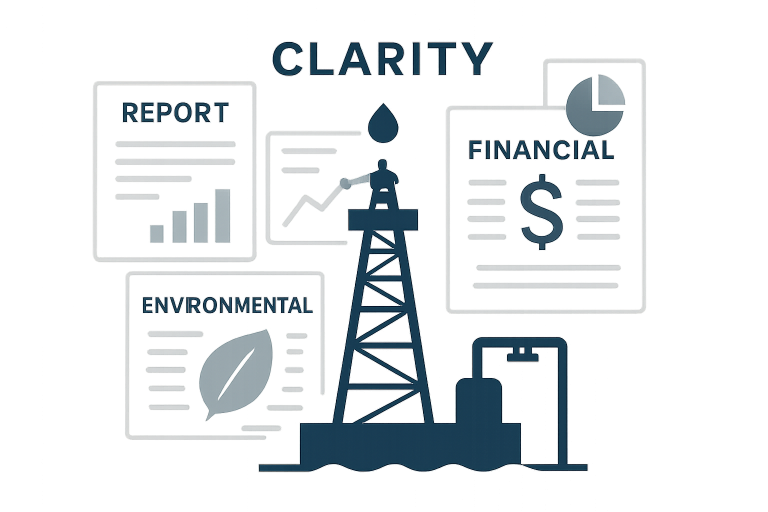
- Complex Financial Structures: Many oil and gas entities operate through convoluted ownership and partnership structures, making it difficult for auditors and outsiders to obtain an accurate picture of their financial health.
- Inconsistent Reporting Standards: Unlike in more mature sectors, oil and gas accounting often lacks uniform global standards, further muddying transparency.
- Environmental Impact Reporting: Measuring and openly sharing carbon emissions, methane leaks, and remediation liabilities remains difficult due to data limitations and inconsistent protocols.
Standardizing Carbon Accounting Frameworks
In response to these challenges, industry coalitions and independent organizations are developing robust, standardized carbon accounting frameworks that mirror established financial reporting models. The Carbon Measures initiative, for example, is building a global, ledger-based system for emissions tracking to overcome fragmented and inconsistent carbon disclosures. Such systems are designed to avoid double-counting, provide product-level transparency, and allow seamless emissions tracking across the entire supply chain.
Implementing universally accepted frameworks will provide clarity for both the industry and external observers, making it easier to audit and compare emissions performance and other sustainability metrics across companies and countries. This is fast becoming critical as major investors and regulatory authorities demand more actionable information for decision-making.
Leveraging Technology for Enhanced Transparency
The adoption of advanced technologies, especially machine learning and data analytics, is redefining how oil and gas companies handle internal controls and reporting. Automated systems can sift through vast datasets—transaction records, emissions readings, equipment logs—to identify outliers and potential inaccuracies. By enhancing anomaly detection, these technologies mitigate fraud, help companies meet compliance obligations, and ensure reports reflect actual business and environmental conditions.
In addition, integrating blockchain-based ledgers further safeguards data integrity, allowing real-time reconciliation across complex supply chains. As regulatory requirements become more sophisticated, technology adoption will play a central role in elevating sector-wide reporting standards.
Regulatory Measures to Promote Honest Accounting
As scrutiny rises, regulators are rolling out new mandates and guidelines designed to close loopholes and promote honest financial reporting. The U.S. Environmental Protection Agency (EPA) recently proposed new standards to enhance transparency and consistency in regulatory analyses. These measures seek to transform the way the costs and benefits of proposed regulations are calculated and made public, aligning regulatory expectations with best accounting practices across the board.
Globally, there is a push for more prescriptive standards, real-time disclosures, and expanded environmental, social, and governance (ESG) reporting. This evolution is positioning transparency not simply as a compliance exercise, but as a strategic driver of industry reputation and stakeholder confidence.
The Role of Stakeholders in Promoting Transparency
Transparency is a multi-sided responsibility that requires active participation from investors, regulators, communities, and watchdog organizations. Stakeholder advocacy plays a crucial role in prompting firms to elevate their standards, improve disclosures, and undertake independent verification. Informed, persistent calls for clarity and accountability help drive systemic change, making transparency the norm rather than the exception.
Conclusion
Building transparency in oil and gas accounting is an evolving, industry-wide imperative shaped by technological innovation, regulatory change, and stakeholder engagement. With standardized frameworks, powerful digital tools, and clear regulatory signals, the sector can deliver accurate, honest accounting. The payoff—stronger trust, regulatory compliance, and sustainable future growth—makes transparency an essential priority for every participant in the value chain.

Ethan Cole is a passionate blogger at Aldalive.com, sharing fresh ideas and engaging content on lifestyle, technology, and everyday trends. With a love for writing and exploring new topics, Ethan aims to make information simple, useful, and inspiring for readers worldwide.