
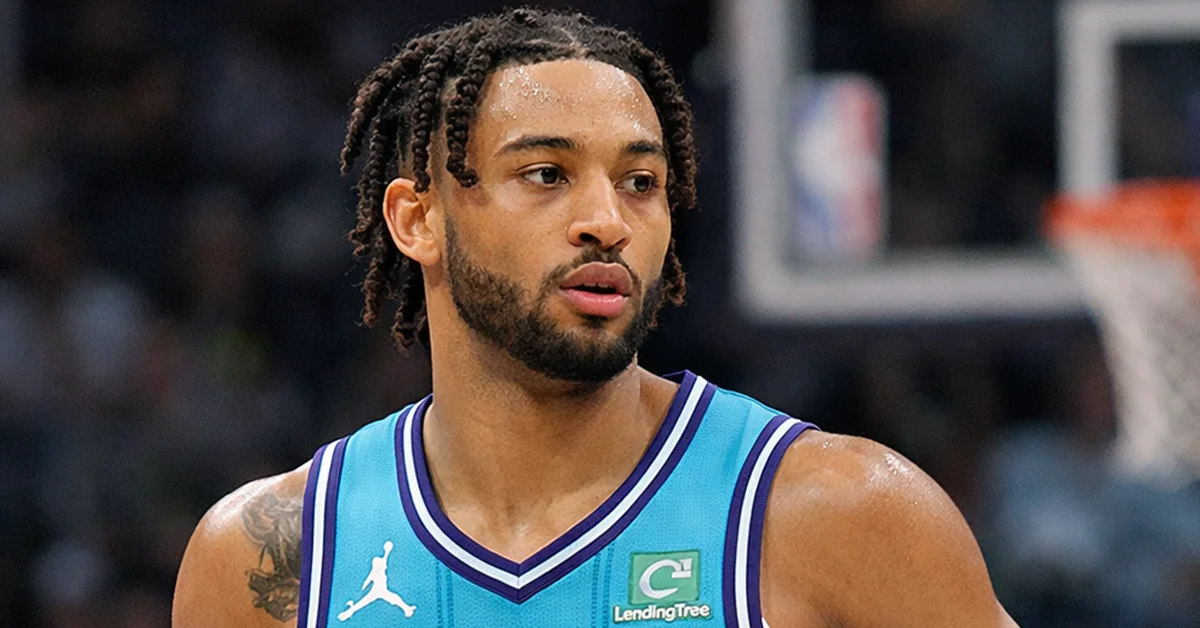
Los Angeles, United States
News Desk | Sports Coverage
Former UCLA standout and ex–NBA guard Amari Bailey is pursuing a rare return to college basketball despite having played in regular-season NBA games, his representatives and NCAA officials confirmed this week. The 21-year-old, who was selected 41st overall in the 2023 NBA Draft, has hired legal counsel and an agent to challenge long-standing National Collegiate Athletic Association eligibility rules, aiming to play one more season at the collegiate level.
Amari Bailey, a guard who starred for the UCLA Bruins during the 2022–23 season, averaged 11.2 points, 3.8 rebounds and 2.2 assists in 30 games before entering the NBA Draft. After signing a two-way contract with the Charlotte Hornets, he appeared in 10 regular-season NBA games before stints in the NBA G League with affiliates including the Greensboro Swarm and Iowa Wolves.
Speaking to ESPN, Amari Bailey said he has long contemplated a return to the NCAA, noting he would currently be a college senior if he had not turned professional. “Right now I’d be a senior in college,” he told the network in a recent interview, explaining his desire to continue developing his game within a team environment and contribute at the collegiate level.
The NCAA has reiterated its stance on such cases. Tim Buckley, the association’s senior vice president for external affairs, stated on social media that the governing body “has not and will not grant eligibility to any players who have signed an NBA contract,” underscoring that its rules currently bar former professionals from regaining college eligibility. Buckley added that action by Congress could further clarify the legal framework around eligibility disputes.
Amari Bailey appeal comes amid evolving interpretations of collegiate eligibility standards. Recent precedents include Alabama’s Charles Bediako, who regained NCAA eligibility after signing a two-way NBA contract but not appearing in NBA games, and James Nnaji, who was drafted but did not play in the league before returning to college basketball. Bailey’s situation, however, is distinct because he logged actual NBA game minutes, potentially marking an unprecedented case if successful.
His pursuit highlights broader tensions between professional opportunities and traditional collegiate pathways, raising questions about athlete rights and the future of NCAA regulations. The outcome could influence how players with professional experience navigate eligibility in the years ahead.
ALSO READ: Silver Price Plunge Sharply As Global Markets React To Monetary Policy Shift
