
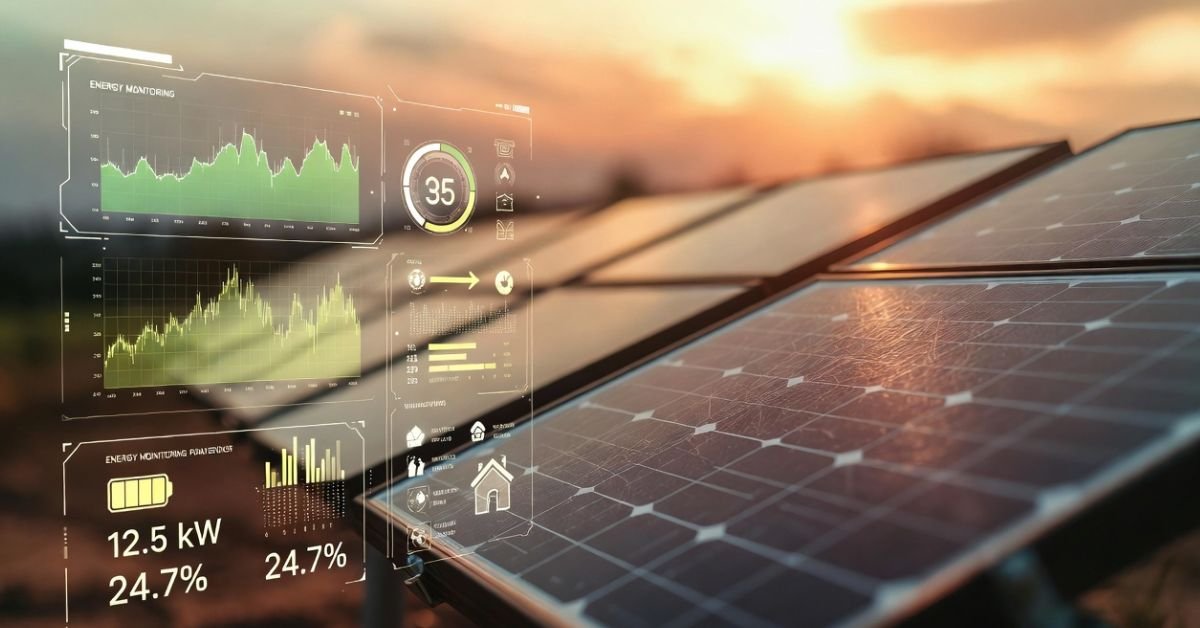
HMS Photovoltaik is a solar technology company built around the conviction that renewable energy must be intelligent, not just abundant. Rather than producing commodity panels, the brand focuses on integrated energy ecosystems systems where generation, storage, and smart control work together as a single cohesive unit.
The company’s R&D pipeline prioritises real-world performance over headline wattage figures. That means investments in durable materials, adaptive inverter firmware, and user-facing monitoring platforms not just the cells themselves. The result is a product range suited to homeowners who want genuine energy independence and businesses that need predictable, auditable power costs.
HMS Photovoltaik’s global presence has grown alongside rising demand for hybrid systems in Europe and beyond, positioning the brand as a serious alternative to both large legacy manufacturers and cut-rate commodity suppliers.
Decoding the Name: The Hybrid Management System (HMS)
HMS stands for Hybrid Management System the core technology architecture that integrates solar generation, battery storage, and an intelligent control layer into one coordinated platform.
A traditional solar installation is essentially a one-way pipe: sunlight enters, electricity comes out, any surplus flows to the grid. The HMS architecture turns that pipe into a loop. Energy is generated, stored, monitored, optimised, and dispatched according to real-time conditions time-of-use tariffs, weather forecasts, household load profiles, and grid signals.
This distinction is why two consumers with identical roof space and identical electricity bills can have very different experiences: one with a conventional string-inverter system, one with HMS. The HMS user typically achieves 70–80 % self-consumption of their solar generation, compared to 30–40 % for a standard grid-tied setup.
Core Components of an HMS Photovoltaik System
Understanding what goes into an HMS system is the first step toward sizing one correctly. There are four essential layers.
High-Efficiency Solar Panels
Monocrystalline or bifacial modules designed for high wattage output and durability in varied climates.
Hybrid Inverter
Manages DC-to-AC conversion, battery charge/discharge, and grid interaction simultaneously the system’s decision engine.
Lithium-Ion Battery Storage
Stores surplus solar energy for use after dark or during grid outages; LFP chemistry for longevity and safety.
AI-Based Monitoring Platform
Mobile app and cloud dashboard for real-time production tracking, fault detection, and energy optimisation.
High-Efficiency Solar Modules
HMS panels use monocrystalline silicon cells the same technology found at the top end of the market achieving cell efficiencies that approach 23 % in laboratory conditions and 21–22 % in real-world installations. Many configurations also use bifacial panels that capture reflected light from rooftop surfaces, adding 5–15 % additional yield without expanding footprint.
All modules are rated for extreme weather: high wind loads, heavy snow, and coastal salt spray. Performance warranties typically guarantee that output will remain above 80 % of nameplate rating after 25 years a meaningful commitment given that most systems are expected to operate for three decades.
The Heart of the System: The Hybrid Inverter
If the solar panels are the farm, the hybrid inverter is the farm manager. It converts DC electricity from the panels into AC current for household use, manages the direction and rate of battery charging and discharging, and decides in real time whether surplus power should go to the battery, be used to heat water, or be exported to the grid.
Crucially, the hybrid inverter maintains its function during a grid outage unlike a conventional string inverter, which shuts down for safety reasons. This is what enables genuine backup power capability, not just a marketing claim.
Energy Storage: Lithium-Ion Batteries
Battery storage is the component that transforms an HMS system from “good” to “transformative.” Without storage, self-consumption tops out around noon when generation peaks but loads are low. With a correctly sized battery bank, the household can draw on solar energy throughout the evening and into the following morning.
HMS battery systems typically use Lithium Iron Phosphate (LFP) chemistry, which prioritises cycle life and thermal stability over raw energy density. LFP cells routinely achieve 4,000–6,000 full charge cycles equivalent to 11–16 years of daily cycling before capacity drops below 80 %. Usable capacity in residential deployments commonly ranges from 5 kWh up to 20 kWh, with modular stacking available for larger commercial loads.
The Intelligence Layer: AI-Based Monitoring & Control
The software stack is what separates the HMS platform from a collection of independently operating hardware. The monitoring application provides live visibility into generation, consumption, battery state-of-charge, and grid import/export presented in an accessible dashboard rather than raw data logs.
Beneath the surface, AI-driven algorithms analyse historical consumption patterns, weather forecasts, and tariff schedules to pre-charge batteries before a cloudy period, delay discretionary loads to solar peak hours, and flag degradation trends before they become failures. Remote diagnostics mean that a certified installer can diagnose most faults without a site visit.
How Does an HMS Photovoltaik System Work?
Energy flows through three distinct phases depending on time of day and weather conditions.
Daytime Solar Generation
Panels generate DC electricity. The hybrid inverter converts it to AC and routes it first to active household loads. Surplus power charges the battery bank. Once the battery is full, additional surplus is exported to the grid (often earning a feed-in tariff).
Evening & Night Discharge
Solar generation drops to zero. The inverter switches seamlessly to battery discharge, powering the home without drawing from the grid. When the battery reaches its minimum state of charge, the system imports from the grid ideally at off-peak tariff rates if the monitoring platform has scheduled this in advance.
Continuous AI Optimisation
Throughout both phases, the intelligent control layer maximises self-consumption, minimises peak-tariff exposure, and responds to real-time signals from the grid or from the homeowner’s preferences. Over weeks and months, the system learns usage patterns and refines its dispatch strategy accordingly.
Key Benefits of Choosing HMS Photovoltaik
Slash Electricity Bills
Self-consumption rates of 70–80 % dramatically reduce grid import. Protection from rising utility tariffs adds to long-term savings.
True Energy Independence
Battery backup keeps critical loads running during outages. No more dependence on a single grid connection for your power supply.
Lower Carbon Footprint
Maximised self-consumption means less fossil-fuel electricity drawn from the grid. Meaningful contribution to household and corporate ESG targets.
The Financial Case in Detail
The payback period for a full HMS Photovoltaik system panels, hybrid inverter, and battery storage typically falls in the range of 7–12 years depending on local electricity prices, available incentives, system size, and consumption profile. After payback, the system generates effectively free electricity for a further 15–20 years, delivering a substantial lifetime return on investment.
Peak tariff reduction deserves particular attention. Many utilities charge two to three times the standard rate during evening demand peaks (typically 4–9 pm). An HMS system with a well-charged battery can sail through those hours without touching the grid at all, targeting the most expensive electricity rather than just the most abundant.
Many countries and regions offer grants, tax credits, or accelerated depreciation for solar-plus-storage installations. Search your local renewable energy database such as DSIRE in the United States before finalising your investment calculation.
HMS Photovoltaik Applications: From Home to Industry
Residential
3–15 kWp systems for homes seeking self-sufficiency and bill reduction.
Commercial
Rooftop arrays from 20–500 kWp for retail, offices, and light industrial premises.
Industrial (C&I)
Large-scale deployments with multi-MWh storage for demand charge management.
Agricultural
Irrigation, cold storage, and workshop power with minimal grid dependency.
Micro-Grid / Off-Grid
Remote sites where grid connection is costly or impossible.
The modular design of HMS systems makes scaling straightforward. A homeowner can start with a basic 6 kWp array and a 10 kWh battery, then add capacity later as budget allows without replacing the core inverter and software infrastructure.
HMS Photovoltaik vs Traditional Solar
The table below illustrates the practical differences between a conventional grid-tied installation and an HMS hybrid system.
| Feature | Traditional Grid-Tied Solar | HMS Photovoltaik Hybrid System |
|---|---|---|
| Main Components | PV panels + string inverter | PV panels + hybrid inverter + battery storage + monitoring software |
| Self-Consumption Rate | 30–40 % (limited by daytime-only use) | 70–80 %+ (battery extends solar use through night) |
| Backup Power | ✗ Grid-tied inverters shut down in an outage | ✓ Battery provides uninterrupted supply |
| Intelligent Optimisation | Basic metering possible | AI-driven load shifting, tariff optimisation, predictive charging |
| Scalability | Limited panels only | Modular battery expansion without core replacement |
| Initial Cost | Lower (simpler hardware) | Higher (additional battery & software stack) |
| Best For | Minimising daytime grid use | Maximising ROI, energy independence, and backup resilience |
Indicative Product Specifications
The table below represents typical performance parameters for a leading HMS hybrid system configuration. Actual specifications vary by product line and installation conditions.
| Component | Parameter | Indicative Range |
|---|---|---|
| Solar Panels | Module wattage | 400 W – 550 W per panel |
| Solar Panels | Module efficiency | 21 – 23 % |
| Solar Panels | Performance warranty | 80 % rated output after 25 years |
| Hybrid Inverter | AC output power (residential) | 3 kW – 10 kW |
| Hybrid Inverter | Peak efficiency | 97.5 – 98.5 % |
| Battery Storage | Usable capacity (residential) | 5 kWh – 20 kWh |
| Battery Storage | Cell chemistry | Lithium Iron Phosphate (LFP) |
| Battery Storage | Cycle life (to 80 % capacity) | 4,000 – 6,000 full cycles |
| System | Self-consumption rate | 70 – 80 %+ |
| System | Payback period (typical) | 7 – 12 years |
What to Consider Before Installing HMS Photovoltaik
A successful installation begins well before the first panel is mounted. Work through this checklist with your installer.
Assess Your Site and Energy Needs
- ✓Conduct an energy audit review 12 months of electricity bills to understand your actual consumption patterns and peak demand periods.
- ✓Assess roof space, orientation, and pitch south-facing (northern hemisphere) roofs at 30–40° are optimal, but east-west split arrays can also work well.
- ✓Calculate available peak sun hours for your location using mapping tools or consult a local installer.
- ✓Identify shading risks from chimneys, trees, or neighbouring buildings at different times of year.
Understand the Financials
- ✓Obtain at least three installer quotes with itemised breakdowns of hardware, installation labour, grid connection fees, and monitoring subscriptions.
- ✓Research available government incentives grants, feed-in tariffs, tax credits, and zero-VAT schemes can significantly alter the payback calculation.
- ✓Model the payback period at current electricity prices and stress-test it against a 5 % annual tariff increase scenario.
- ✓Factor in battery replacement cost at the end of the warranty period (typically year 10–15).
Choose a Certified Installer
A hybrid system is more complex than a basic grid-tied installation it requires competent configuration of the inverter’s battery management parameters, grid protection settings, and monitoring platform integration. Insist on an installer certified for hybrid and battery storage systems, ideally with demonstrable HMS Photovoltaik experience. Ask for references and check registration with your national electrical safety body.
Warranties and Maintenance
- ✓Panel product warranty: 10–15 years against manufacturing defects.
- ✓Panel performance warranty: 25 years at 80 % of rated output.
- ✓Inverter warranty: typically 5–10 years, extendable.
- ✓Battery warranty: 10 years or a specified number of cycles, whichever comes first.
- ✓Maintenance schedule: annual system check, panel cleaning in dusty environments, software updates via the monitoring platform.
Grid connection rules for battery storage vary by country and region. In some jurisdictions, a hybrid inverter must meet specific G98/G99 (UK), VDE-AR-N 4105 (Germany), or equivalent standards before it can be connected. Confirm compliance before purchase.
The Future of HMS Photovoltaik & Solar Innovation
The next decade will redefine what a hybrid solar system can do. Several technology trends are already visible on the roadmap.
Solid-State BatteriesVehicle-to-Grid (V2G)Predictive AI AnalyticsBuilding-Integrated PV (BIPV)Virtual Power PlantsPeer-to-Peer Energy Trading
Solid-state batteries promise significantly higher energy density and faster charging than current LFP cells, potentially halving the physical footprint of a 15 kWh storage system. Vehicle-to-grid (V2G) technology will allow electric vehicles to act as mobile battery banks a household EV could contribute 20–30 kWh of dispatchable storage that the HMS platform manages alongside roof-mounted batteries.
Virtual power plants (VPPs) represent perhaps the most significant shift. As aggregators recruit HMS users into coordinated demand-response pools, individual home systems can earn revenue by modulating their import and export behaviour on command turning domestic solar storage into a grid service asset. HMS Photovoltaik’s AI monitoring infrastructure is well-positioned for this transition.
The direction of travel is clear: the HMS platform is not a static product but an evolving ecosystem designed to grow more valuable as the energy landscape changes around it.
Conclusion
HMS Photovoltaik represents something more considered than a standard solar panel purchase. The “Photovoltaik” in the name signals European engineering heritage; the “HMS” architecture signals an ambition to solve the whole energy equation, not just the generation piece.
For homeowners and businesses prepared to invest in a complete hybrid system panels, intelligent inverter, battery storage, and AI-driven monitoring the reward is a fundamentally different relationship with electricity: higher self-consumption, genuine resilience against outages and tariff spikes, and a system that grows smarter and more valuable over time.
CLICK HERE FOR MORE BLOG POSTS

John Authers is a seasoned and respected writer whose work reflects the tone, clarity, and emotional intelligence that readers value in 2025. His writing blends deep insight with a natural, human voice—making complex ideas feel relatable and engaging. Every piece he crafts feels thoughtful, original, and genuinely worth reading.