
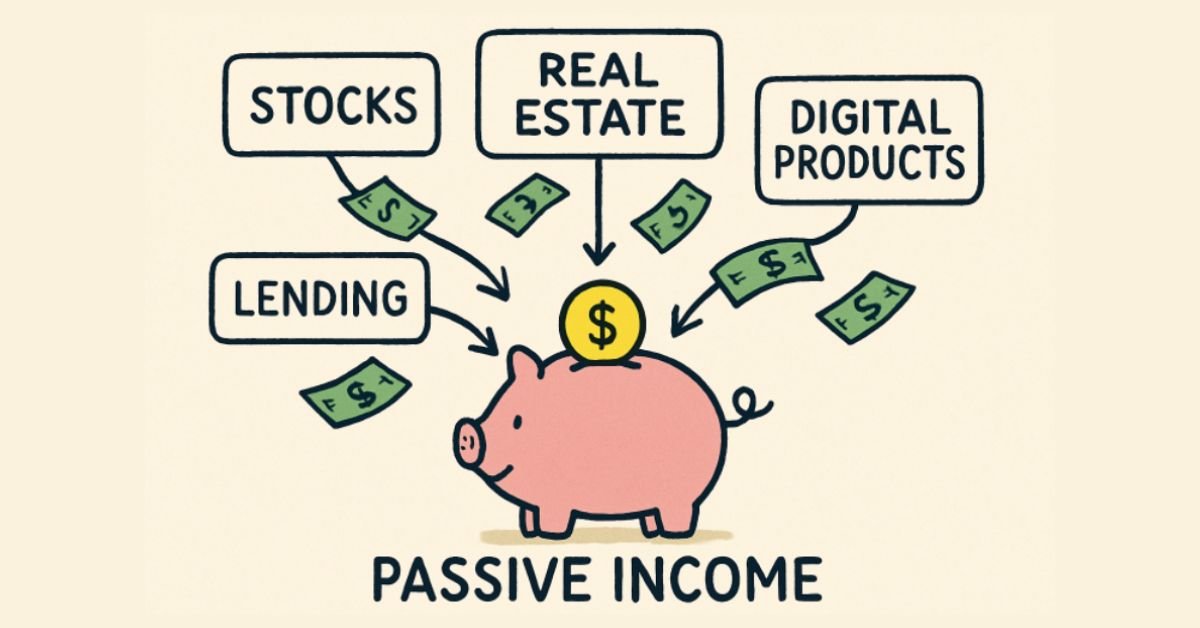
Building reliable income streams outside of traditional employment has become an important goal for many individuals navigating today’s evolving financial landscape. Advances in technology, wider access to financial tools, and increased market transparency have opened the door to a range of approaches that can generate steady returns over time. From dividend-focused investments to real estate and alternative assets, passive income methods are often designed to balance growth potential with risk management, allowing investors to pursue long-term stability while adapting to changing economic conditions.
As these strategies grow more diverse, understanding how they fit within a broader financial plan is essential. Market trends, personal risk tolerance, and time horizons all play a role in determining which approaches may be most suitable. Some investors choose to follow structured frameworks or insights shared by firms such as High Pass Asset Management when evaluating asset allocation and income-oriented opportunities. By focusing on education, diversification, and disciplined decision-making, modern investors can better position themselves to create income streams that align with their financial goals without relying on constant active oversight.
Dividend Stocks and Income ETFs
One of the most established passive income strategies involves investing in dividend-paying stocks and income-focused exchange-traded funds (ETFs). When shareholders own stock in companies with a record of steady dividends, they receive a portion of the company’s profits regularly. These payments provide a stable income source and can be a defensive measure during down markets. Income-focused ETFs take this approach further by pooling together a basket of dividend-paying companies, offering diversification that helps manage risk and smooth out returns. Investors benefit from the potential for capital appreciation alongside consistent payouts, making these investments a cornerstone of passive wealth accumulation.
ETFs and dividend stocks do carry some market risk, but their risk can be substantially mitigated by focusing on companies with long histories of stable earnings and dividend growth.
Real Estate Investment Trusts (REITs)
For those seeking exposure to real estate without the complexity of direct ownership, REITs present a compelling opportunity. REITs are companies that own, operate, or finance income-producing real estate and are required by law to distribute most of their taxable income as dividends to shareholders. This characteristic makes them popular among investors looking for high-yield, consistent returns. By investing in REITs, individuals can participate in the income and appreciation potential of commercial properties, apartment complexes, shopping centers, and more, all without assuming the direct responsibilities of being a property manager.
REITs are particularly attractive in a low-interest-rate environment, as their yields often surpass those of government bonds or traditional savings accounts. However, it is important to evaluate the sectors REITs concentrate on, as market performance can be tied to the health of underlying real estate markets.
Peer-to-Peer Lending
The digital economy has made peer-to-peer (P2P) lending an accessible avenue for passive income. P2P lending platforms connect individual investors and borrowers, allowing lenders to earn interest by funding personal or small-business loans. Diversifying across multiple loans can help manage risk and create a portfolio of monthly repayments. While returns are often attractive, thorough due diligence is essential. Investors should consider the creditworthiness of borrowers, platform track records, and applicable fees when building their allocation.
Robo-Advisors and Automated Investing
Robo-advisors have transformed passive investing through advanced algorithms and automation. These platforms offer personalized investment options that align with your financial goals and risk tolerance, all with a user-friendly interface and transparent fee structure. Key features such as automated rebalancing, tax-loss harvesting, and 24/7 account oversight remove much of the manual work typically associated with portfolio management. As an efficient alternative to traditional advisory services, robo-advisors are well-suited for investors who prefer a hands-off approach.
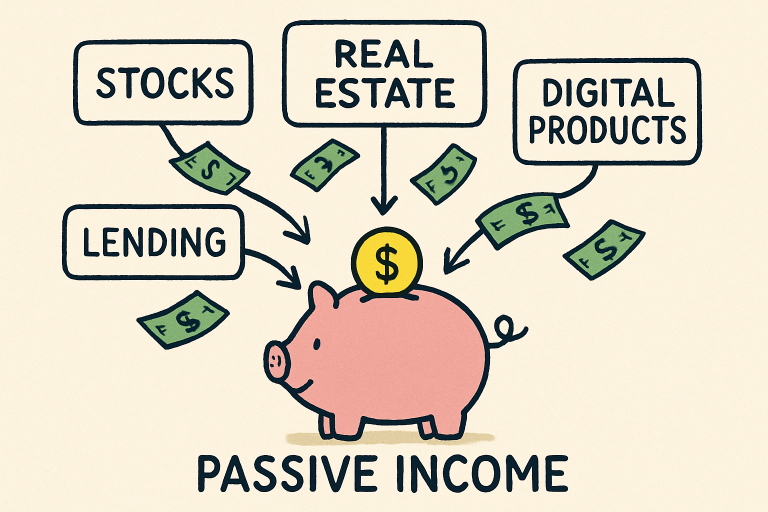
Creating Digital Products
Creating and selling digital products is a modern passive income avenue with significant scalability. Digital goods such as e-books, online courses, software applications, and design templates can be distributed to a global audience with minimal ongoing maintenance. The secret to success in this field is identifying a topic or market need, developing high-quality offerings, and leveraging online platforms for sales and marketing. Once a product is published, it can continue to generate revenue with minimal intervention, especially when paired with effective search engine optimization and content marketing strategies.
Affiliate Marketing
Affiliate marketing allows individuals to earn commissions by promoting other companies’ products or services. By sharing unique referral links on blogs, websites, or social media channels, affiliates are compensated for sales or leads generated through their efforts. Success in this area depends on two important factors: delivering genuine, trustworthy recommendations aligned with your audience’s interests and building deep relationships with followers who value your guidance. In recent years, affiliate marketing has become a reliable source of supplementary income for both individuals and businesses willing to invest in authentic content creation.
Investing in Bonds and Annuities
Bonds and annuities are ideal for conservative investors seeking reliable, predictable income. Bonds, whether issued by governments or corporations, pay periodic interest and return principal at maturity. Annuities, offered by insurance companies, provide a consistent payout stream for a set term or for life. These instruments can support a well-diversified income portfolio, cushioning returns during periods of market volatility. As interest rates fluctuate, the yield and appropriateness of these options will vary. Investors should regularly review their fixed-income allocation to maintain the desired balance and alignment with their long-term financial objectives.
Conclusion
Investors of all experience levels can benefit from a well-planned blend of passive income streams. Whether through market-based instruments, real estate funds, technology-driven lending options, or entrepreneurial ventures such as digital products and affiliate marketing, the possibilities are extensive. By staying informed and adjusting your approach to reflect changing financial goals or market conditions, you can construct an adaptable, robust portfolio that generates steady income and builds wealth over time.
CLICK HERE FOR MORE BLOG POSTS

Ethan Cole is a passionate blogger at Aldalive.com, sharing fresh ideas and engaging content on lifestyle, technology, and everyday trends. With a love for writing and exploring new topics, Ethan aims to make information simple, useful, and inspiring for readers worldwide.