

Introduction
The retail landscape is undergoing a significant transformation as automation becomes increasingly central to daily operations. One of the most notable innovations driving this change is the self-service kiosk, which empowers both shoppers and store employees with a streamlined approach to checkout. Today’s retail environments are leveraging the flexibility and efficiency of modern self checkout system solutions to address rising consumer expectations and boost operational productivity.
Traditional checkout lanes, once the only option, now compete with kiosks designed for speed, accuracy, and convenience. As more retailers invest in innovative kiosk solutions, customers benefit from quicker transactions, while businesses can reallocate staff to higher-value tasks and improve overall store performance.
The integration of technology into the checkout experience is not only about saving time; it’s also about creating a seamless and accessible shopping journey for everyone. With self-service kiosks, the customization and flexibility they offer ensure that stores can efficiently serve diverse customer needs, whether for in-store purchases, loyalty discounts, or the redemption of digital coupons.
This shift has been accelerated by changes in consumer behavior and increased competition, placing more pressure on retailers to innovate. The growing presence of kiosks in supermarkets, convenience stores, and mass merchandisers highlights how self-checkout is becoming a key component of a broader digital retail strategy.
The Rise of Self-Service Kiosks
Self-service kiosks have rapidly moved from being a novelty to a necessity in retail stores. Their rise is a response to ongoing labor challenges, as well as to the increasing demand from customers for speedier service. Retailers such as Stop & Shop have led the way by rolling out kiosk solutions aimed at making discount programs accessible to all, regardless of customers’ tech savviness or internet connectivity. These digital interfaces enable shoppers to effortlessly redeem coupons by scanning a loyalty card or entering a simple phone number.
Large retailers are also leveraging kiosks as a way to differentiate themselves in a competitive landscape. By offering self-checkout options, businesses are not only improving the pace of shopping but are also better prepared for busy seasons and high-traffic days. According to an article from Forbes, the retail sector is experiencing a rapid increase in kiosk adoption as a means of enhancing the customer experience and addressing staffing shortages.
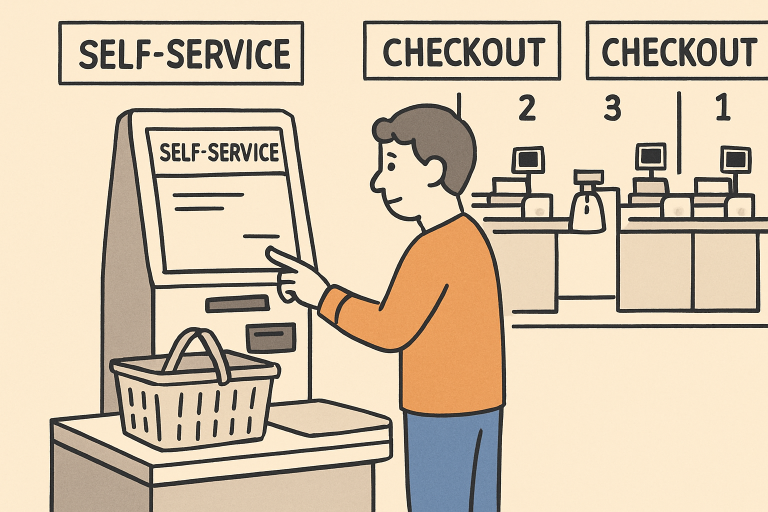
Technological Advancements in Self-Checkout Systems
Modern self-service kiosks are benefiting from advances in artificial intelligence, machine learning, and IoT connectivity. Kiosks equipped with computer vision can quickly and accurately identify products without barcodes, while automated speech recognition enables hands-free operation and increased accessibility. Personalized recommendations and targeted promotions are becoming standard features, further enhancing customer engagement and satisfaction.
Retailers are also turning to IoT-enabled systems to monitor kiosk performance, automatically alerting staff to technical issues and facilitating remote diagnostics. This ensures minimal downtime and a smoother shopping experience for customers. As highlighted by Wired, these innovations are transforming checkout lanes into high-tech hubs that offer personalized, efficient, and engaging experiences.
Consumer Preferences and Adoption Rates
Shoppers increasingly appreciate the autonomy and speed provided by self-service options. Surveys consistently show that more than three-quarters of consumers prefer self-checkout for quick trips and smaller purchases. The adoption rate is notably high among younger generations, who value digital-first experiences and minimal waiting times. In this context, retailers are investing in user-friendly designs and intuitive workflows that reduce friction and encourage repeat use.
These trends highlight a shift in expectations—customers want to be in control of their shopping experience, whether it’s scanning and bagging items or applying rewards. In turn, retailers who invest in advanced self-checkout systems are seeing increased satisfaction scores and greater customer loyalty.
Challenges and Solutions in Implementing Self-Service Kiosks
Despite their widespread success, kiosks come with their own set of challenges, including increased risks of theft, user errors, and technical issues. To mitigate these risks, some retailers have modified policies and tightened monitoring on self-checkout lanes. For instance, Target introduced item limits at self-checkout stations to curb loss and improve flow, a move covered by Axios.
Solutions include integrating AI-powered loss prevention systems, enhancing user interfaces, and providing robust staff training to support customers when needed. Retailers are discovering that a hybrid approach—balancing self-service with attentive support for those who need assistance—can deliver the best results.
Future Trends in Self-Checkout Technology
The future of retail checkout lies in deeper digital integration and personalization. Industry forecasts predict increased use of mobile integration, allowing shoppers to use their own devices to scan, pay, and even bag items. Enhanced AI may enable real-time product recommendations, instant couponing, and faster error resolution, creating a tailored experience for each customer.
As these systems continue to evolve, their adoption is expected to spread to new sectors beyond grocery and big-box retail, including specialty stores, quick-service restaurants, and even entertainment venues. The trajectory points to a retail environment where frictionless and personalized interactions are standard, redefining how customers engage with physical stores.
Conclusion
Self-service kiosks have revolutionized the retail checkout process, offering faster, more efficient, and highly convenient experiences for shoppers. By reducing wait times and streamlining transactions, these systems empower customers to complete purchases independently while maintaining accuracy and control. As technology continues to evolve, kiosks are integrating advanced features such as mobile payment, personalized promotions, and real-time inventory updates, further enhancing the shopping experience. For retailers, these innovations enhance operational efficiency, lower labor costs, and enable staff to concentrate on delivering exceptional customer service. Over time, self-service kiosks are set to become a standard component of modern retail environments.
CLICK HERE FOR MORE BLOG POSTS

Ethan Cole is a passionate blogger at Aldalive.com, sharing fresh ideas and engaging content on lifestyle, technology, and everyday trends. With a love for writing and exploring new topics, Ethan aims to make information simple, useful, and inspiring for readers worldwide.